CRI Explained: Why Colour Rendering Matters in Commercial Lighting
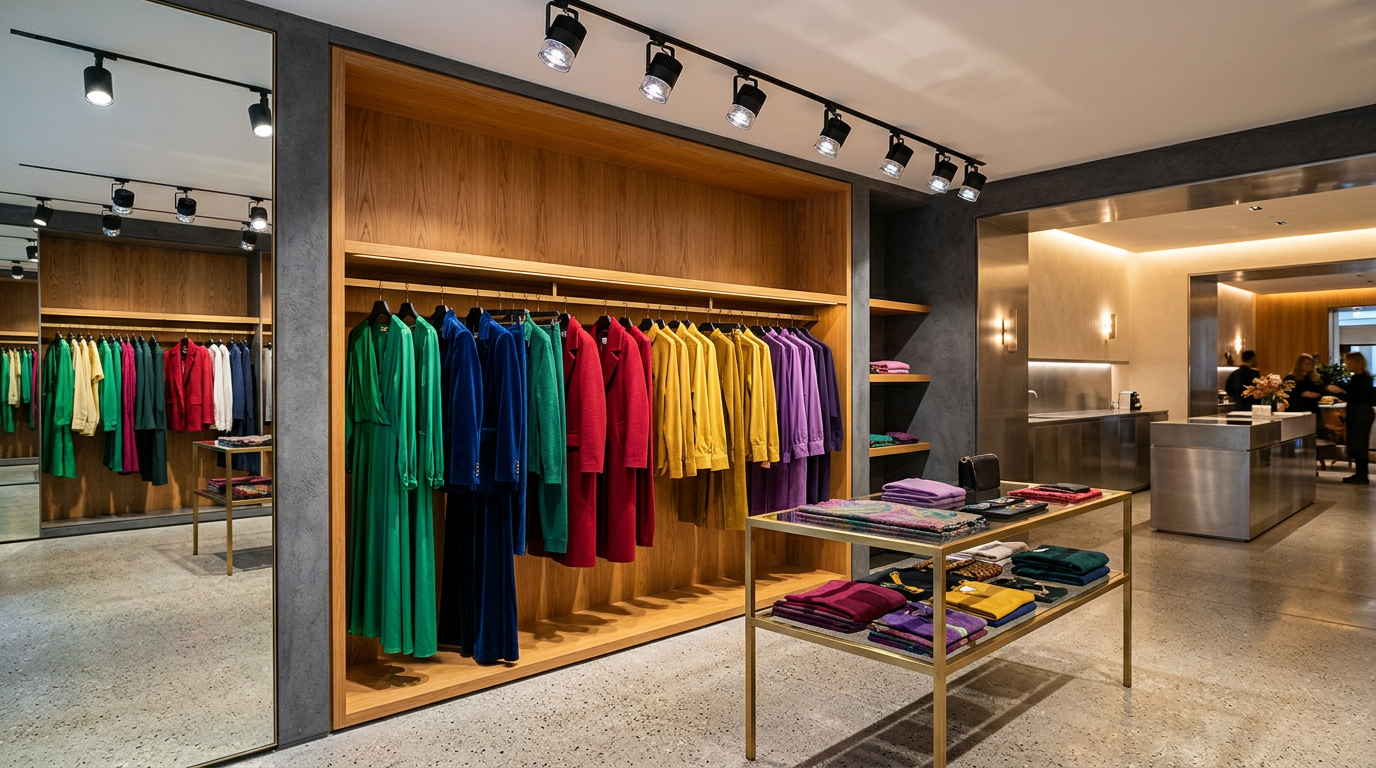
When planning lighting for a commercial project, factors like shape, colour temperature, energy efficiency, and cost often take centre stage. However, one critical element is frequently overlooked: colour rendering, also known as CRI. Understanding the CRI lighting meaning can significantly impact how a space feels and functions.
From retail environments where product appearance drives sales, to healthcare settings where accurate colour perception is vital, the importance of CRI in commercial lighting cannot be overlooked. In this guide, we’ll break down what CRI is, how it works, and how to select the fittings with the right CRI for your business.
What is CRI in Lighting (Colour Rendering Index)?
Developed well over 50 years ago, the Colour Rendering Index (CRI) is a metrics with a scale from 0 to 100 that measures how accurately a light source reveals the true colours of objects compared to natural daylight, with 100 being the best score. In simple terms, — it’s a measure of how “true to life” colours look under a specific artificial light source.
-
CRI 100 = Colours appear as they would under natural sunlight
-
CRI 80–90 = Good colour accuracy (common in commercial settings)
-
CRI below 70 = Poor colour rendering; colours may appear dull or distorted
How CRI Works
CRI is calculated by comparing how a light source renders a set of standard test colours against a reference light (usually daylight or incandescent light).
A higher CRI means:
-
Colours look more vibrant and natural
-
Subtle differences in shades are easier to distinguish
A lower CRI means:
-
Colours can appear washed out or inaccurate
-
Visual clarity and detail are reduced
This is why colour rendering index lighting plays such a critical role in environments where colour accuracy matters. Think food shops or fashion retail, where a true definition of a product directly affects sales.
Why CRI Matters in Commercial Lighting
The importance of CRI in commercial lighting goes beyond aesthetics, it directly affects the perception of a product, and even revenue.
Key reasons CRI matters:
-
Customer Experience: In retail, accurate colours influence buying decisions
-
Employee Productivity: Better visual clarity reduces eye strain
-
Safety & Accuracy: Essential in healthcare and industrial settings
-
Brand Presentation: Colours appear consistent with brand identity
Investing in high CRI lighting benefits businesses by improving both visual comfort and operational performance.
CRI vs Other Lighting Metrics
While CRI is important, it’s just one part of the bigger picture. A light fitting can have a high output and be efficient but still have an average colour rendering. That’s why CRI should always be considered alongside metrics like light output, efficiency and colour temperature.
What is Considered a Good CRI for Different Commercial Spaces?
1. Retail Lighting
• Recommended CRI: 90+
High CRI lighting ensures products look attractive and true to colour, which can directly influence purchasing decisions.
2. Office Lighting
• Recommended CRI: 80–90
Fittings in this range will support visual comfort and reduce fatigue, improving employee’s productivity.
3. Healthcare Lighting
• Recommended CRI: 90+
Critical for accurate diagnosis, especially when assessing skin tones and medical conditions.
4. Hospitality
• Recommended CRI: 85–95
Lighting with high CRI really brings the colours of food and beverages out, while enhances the ambience.
5. Industrial & Warehouses
• Recommended CRI: 70–85
For general warehouse activities, lighting around 70-85 CRI is adequate. Lighting with higher CRI may be needed for more detailed work.
Limitations of CRI
The method of measuring CRI has been largely unchanged since 1974. While relevant, CRI has it’s limitations:
-
It doesn’t account for all colours- only 8 colour samples are measured for CRI
-
Two light fittings with the same CRI can render colours very differently
-
When comparing CRI values, Correlated Colour Temperature (CCT) must be identical
-
It doesn’t measure how pleasing a light appears
While the CRI method remains the industry standard, some professionals are now using a more comprehensive method called TM-30. Developed in 2015, this method measures 99 colour samples. CRI is measured using a light fidelity ONLY (answering the question of how true a colour is). The TM-30 method uses a range of three colour metrics:
Rf index- Colour Fidelity
Rg index- Colour saturation
Gamut shape – Description of Hue and saturation
How to Choose the Right CRI for Your Project
When specifying lighting, consider the following factors:
-
Purpose of the space: Does colour accuracy matter?
-
Type of activity: Detailed tasks require higher CRI
-
Customer interaction: Retail and hospitality benefit from higher CRI
-
Budget vs performance: Higher CRI often costs more but delivers better results
A balanced approach ensures you maximise both performance and cost-efficiency.
Common Mistakes to Avoid when selecting lighting
-
Focusing only on brightness (lumens)
-
Ignoring CRI in customer-facing environments
-
Using low CRI lighting in high-detail tasks
-
Assuming all LED lighting has high CRI
Avoiding these mistakes increases chances that your lighting delivers both function and visual quality.
Future of Colour Rendering in Lighting
Lighting technology continues to evolve, with innovations focusing on:
-
Enhanced spectral tuning for better colour accuracy
-
Human-centric lighting solutions
-
Advanced metrics beyond CRI
As businesses demand more precise and natural lighting, colour rendering will remain a key consideration in commercial design.
FAQs
What is considered a good CRI?
A CRI of 80+ is generally good, while 90+ is considered excellent for most commercial applications.
Why is high CRI lighting important?
It improves colour accuracy, enhances visual comfort, and supports better decision making in environments like retail and healthcare.
Does higher CRI mean brighter light?
No. CRI measures colour accuracy, not brightness.
Is high CRI lighting worth the higher price?
Yes—especially in spaces where appearance, detail, and user experience matter.
By understanding the CRI lighting meaning and applying it correctly, businesses can create attractive environments that not only look better but also perform more effectively. Whether you're designing a retail space or upgrading office lighting, prioritising the colour rendering index lighting will ensure your investment delivers maximum impact.