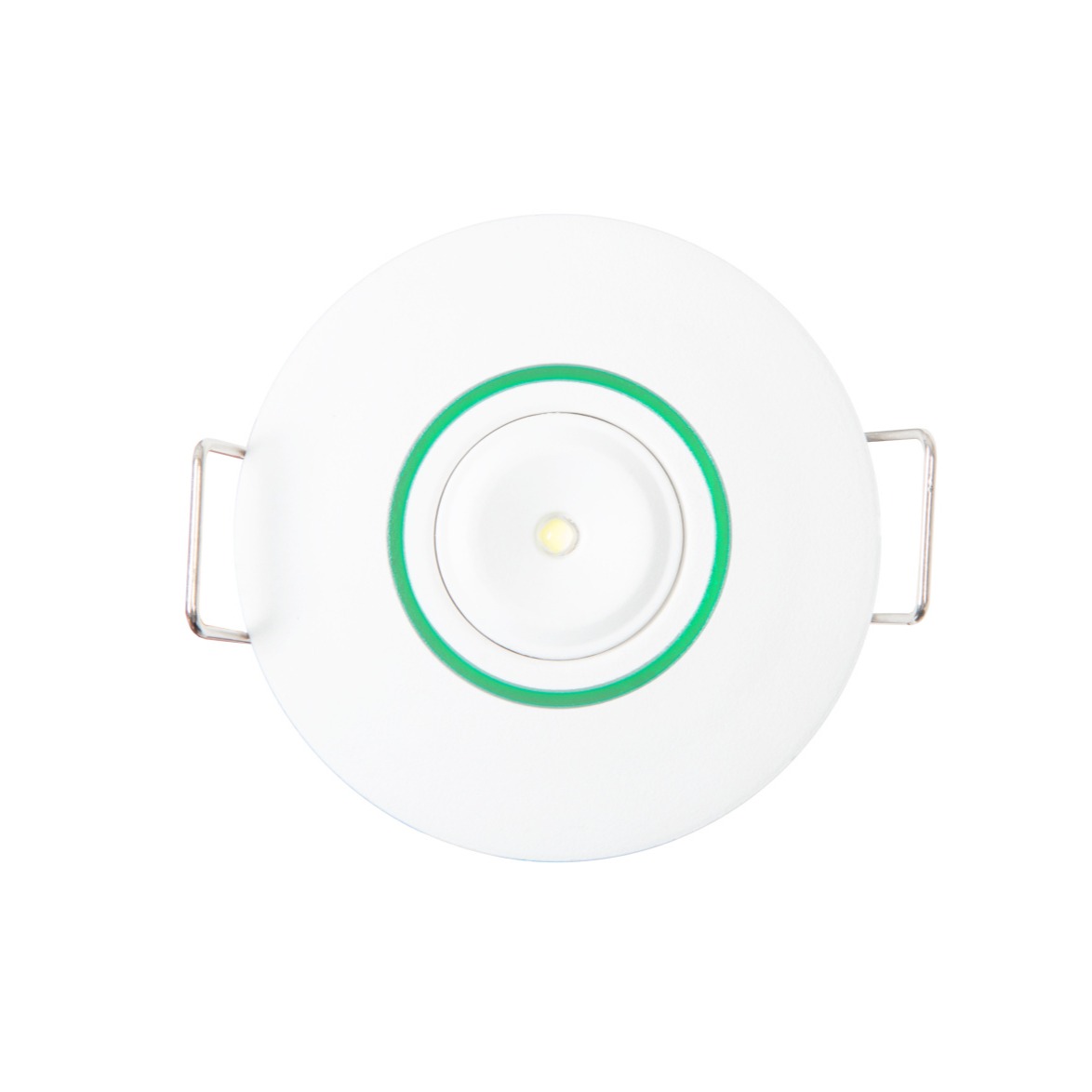
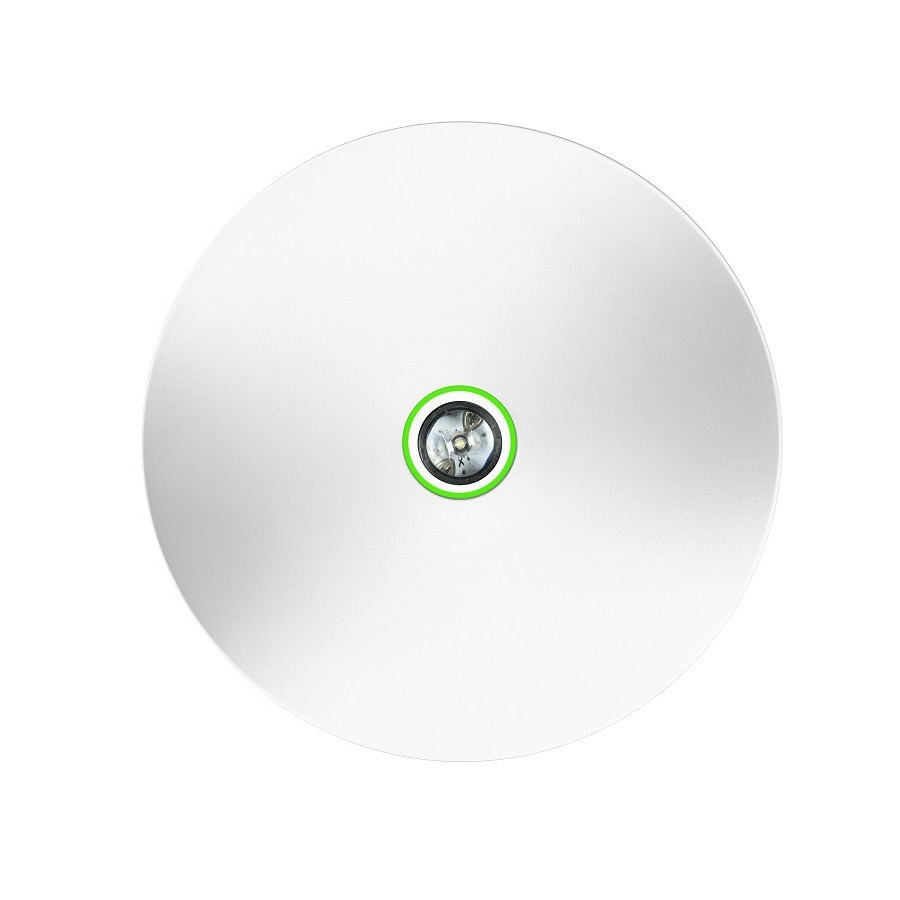
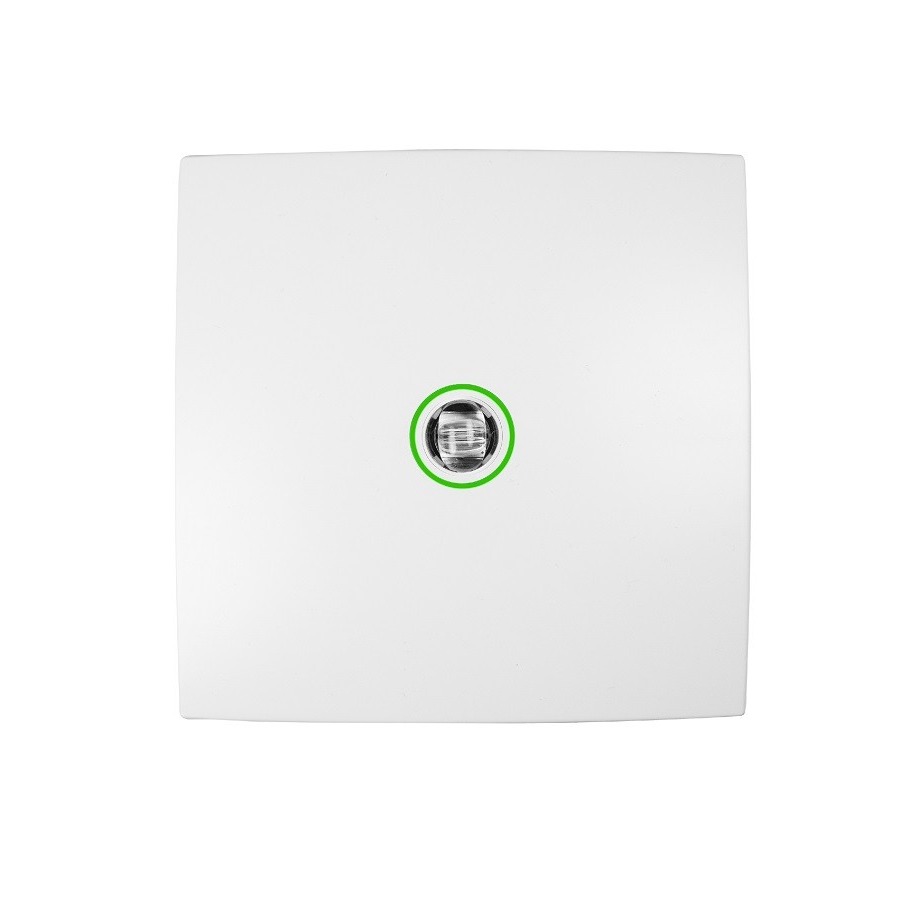
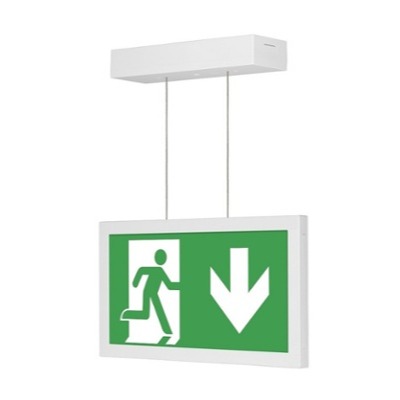
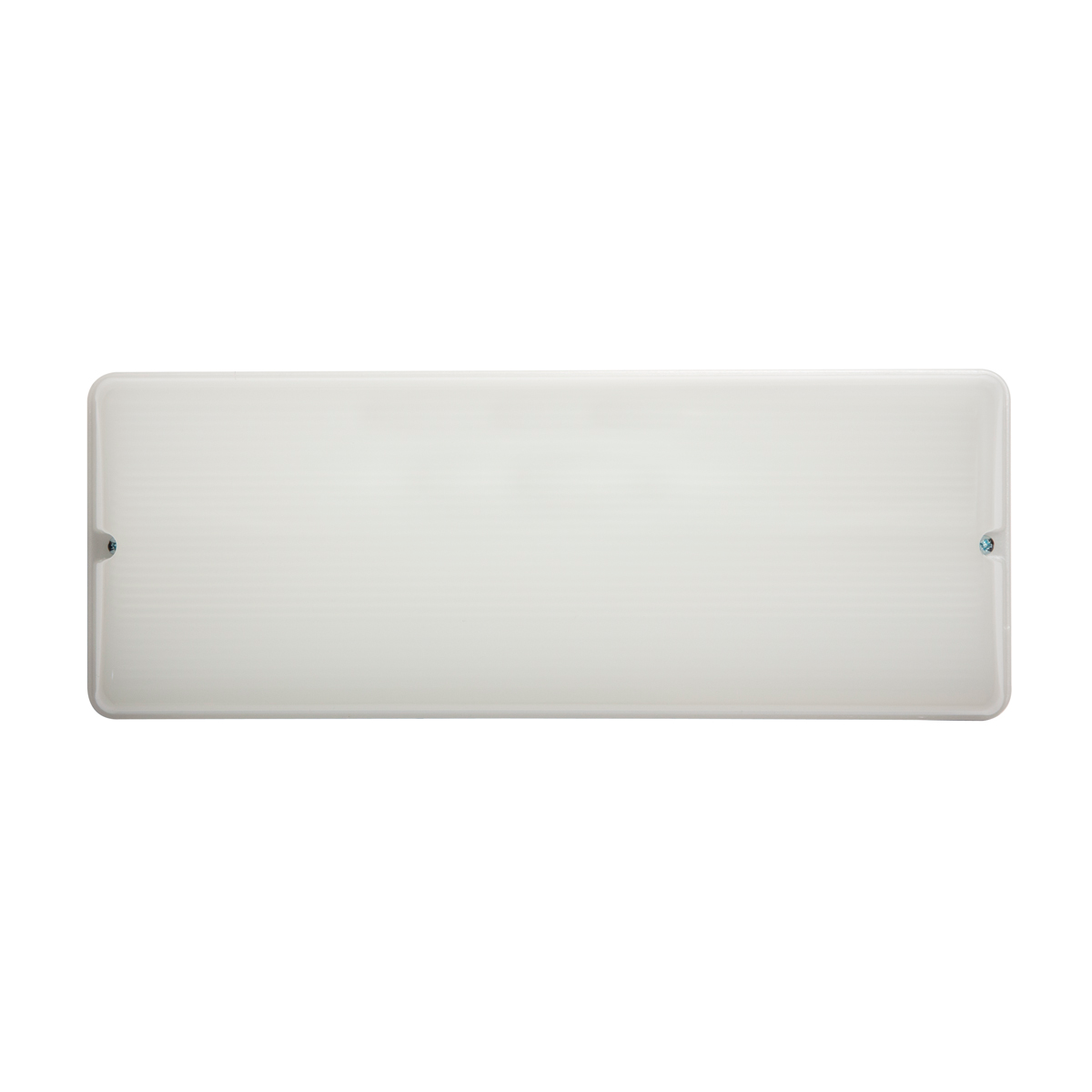
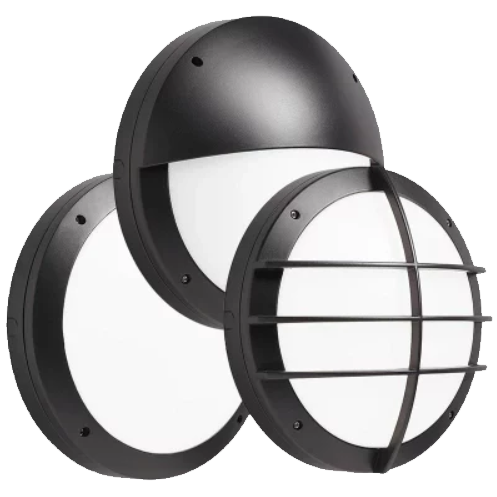
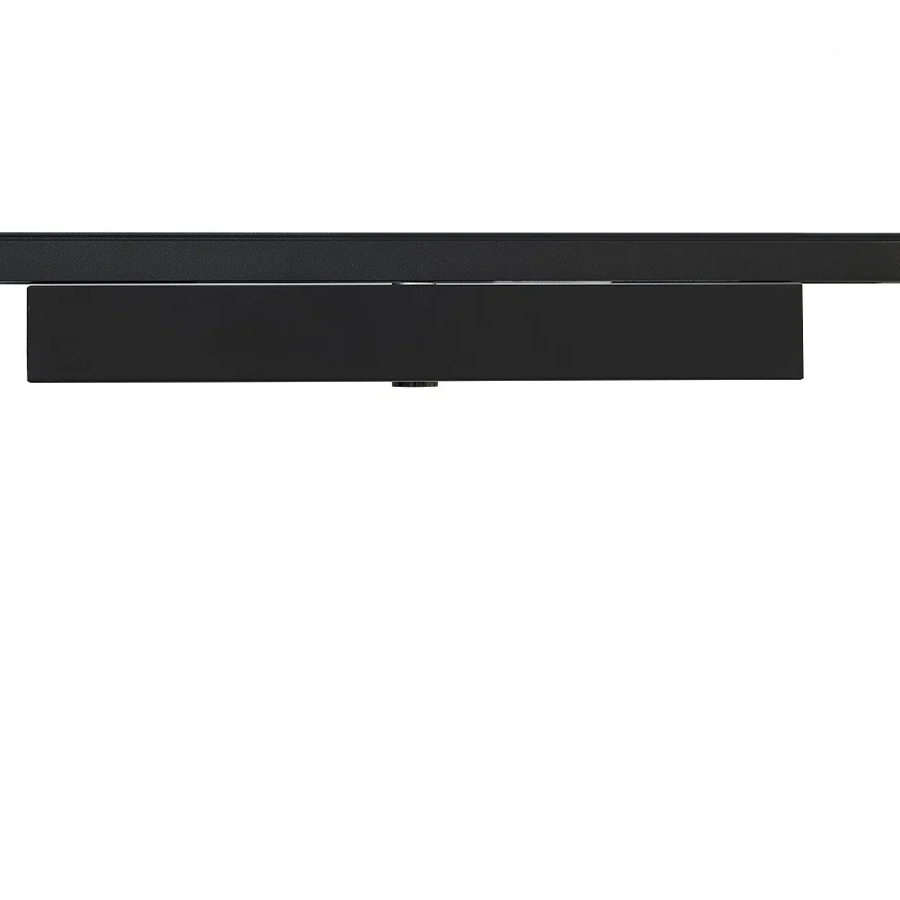
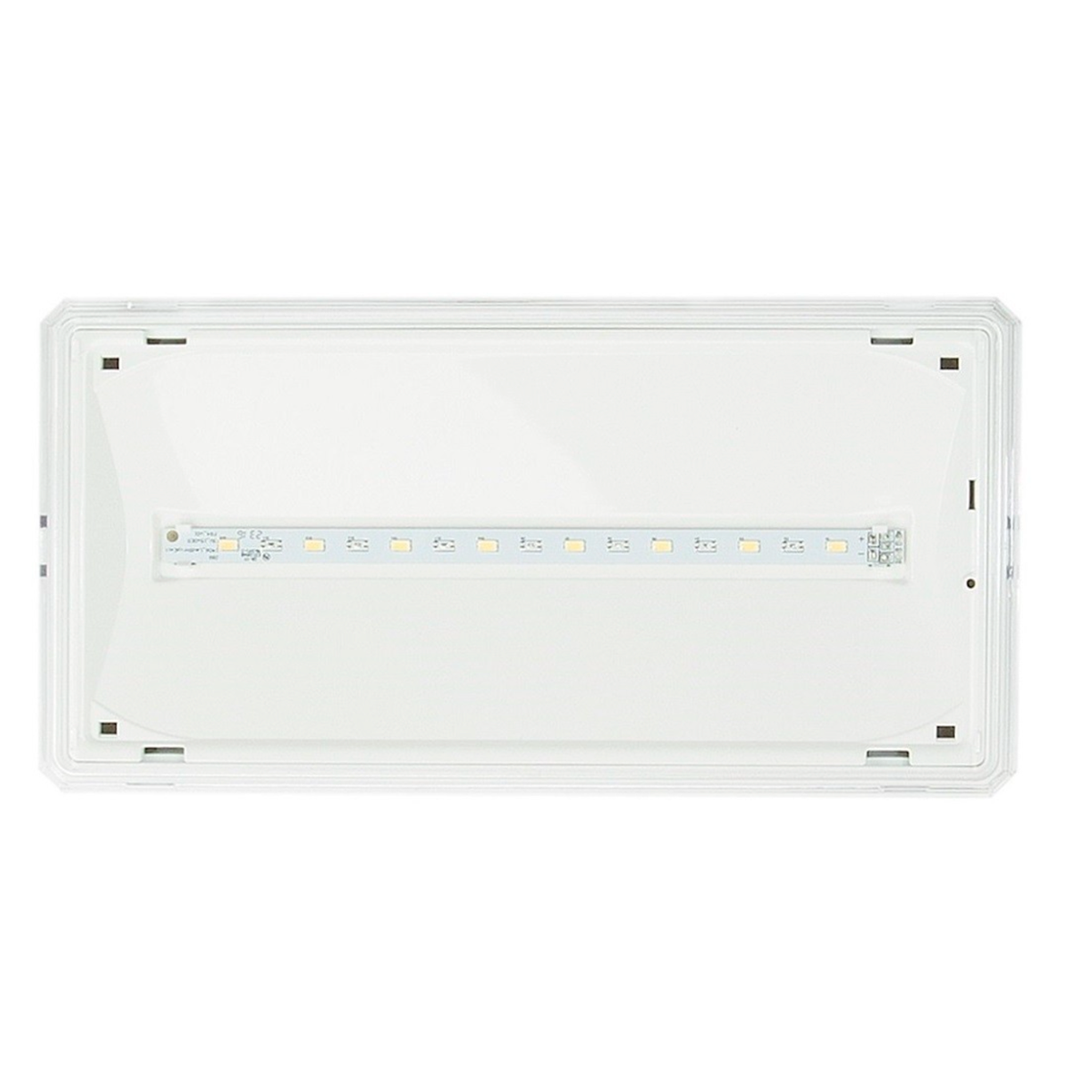
Emergency lighting is a legal requirement in commercial buildings and workplaces. In England and Wales it falls under the Regulatory Reform (Fire Safety) Order 2005, and systems are designed to BS 5266-1. We supply complete emergency lighting systems for offices, schools, retail and hospitality: escape route and open area lighting, exit signs, bulkheads, and integrated emergency versions of our own luminaires.
When we supply your project, emergency lighting design is included: we select suitable fittings and place them on your lighting layout. Choose self-test fittings that test themselves and show faults on an indicator, or DALI-2 emergency lighting that reports test results to a central system.
Emergency Lighting Products
Choosing emergency lighting.
9 products are shown here, with efficacy of up to 120 lm/W (Eam Emergency Bulkhead). Control options include DALI-2, DALI and Casambi. Every fitting is supplied by 299 Lighting from London and Bristol. We reply to quote requests within one working day, and lighting layouts are included when we supply.
Emergency lighting must let people leave a building safely if the mains supply fails. In the UK it is designed to BS 5266-1, with the minimum lighting levels set by BS EN 1838.
BS EN 1838:2024 sets at least 1 lux across the full width of escape routes and 0.5 lux in open areas. Most UK commercial buildings specify a 3-hour duration so the building can be re-occupied quickly after a power cut.
Maintained fittings stay on all the time; non-maintained fittings only light when the power fails. Self-test and DALI-2 monitored fittings reduce the cost of the monthly and annual tests.
Frequently asked questions.
Which product in this range is the most efficient?
Eam Emergency Bulkhead has the highest efficacy in this range, at up to 120 lm/W depending on the configuration.
What dimming and control options are available?
Products in this range are available with DALI-2, DALI or Casambi control. Each product page lists the options for that fitting.
What lighting level does emergency lighting need?
BS EN 1838 requires at least 1 lux across the full width of escape routes and 0.5 lux across open areas. Higher-risk task areas need more.
How long should emergency lighting last?
Most UK commercial buildings use a 3-hour duration. Shorter durations are only acceptable in limited cases set out in BS 5266-1.
What is the difference between maintained and non-maintained?
Maintained emergency lights are on all the time and stay on when the power fails. Non-maintained fittings are off in normal use and only light when the mains supply fails.
Can you design the emergency lighting layout?
Yes. Our Light Engineers prepare emergency lighting layouts and calculations to BS 5266-1 and BS EN 1838 as part of a quotation.
Need help with emergency lighting for commercial buildings?
Send us your drawings and we will design the emergency lighting as part of your quotation.
How to choose emergency lighting
Standards
Emergency lighting in the UK is designed to BS 5266-1:2025 and BS EN 1838:2024, with system requirements in BS EN 50172:2024 (also numbered BS 5266-8:2024).
Light levels
Escape routes need at least 1 lux; BS 5266-1:2025 applies this across the full width of the route, excluding the borders. Open areas need at least 0.5 lux, and high-risk task areas 10% of the normal lighting level or 15 lux, whichever is greater.
Maintained or non-maintained
Maintained fittings stay lit at all times; non-maintained fittings light only when the mains supply fails.
Duration
Most commercial premises specify a 3-hour duration so the building can be re-occupied safely after a supply failure.
Testing
Self-test fittings carry out the monthly function test and annual full-duration test automatically and report faults.
Integration
Integrated emergency versions of our luminaires keep ceilings clean by avoiding separate emergency fittings.
See our BS 5266-1:2025 overview.
Not sure which fitting is right? Send us your drawings and we will reply with recommended options within one working day.
Emergency lighting systems explained
Self-test or DALI-2 emergency lighting
Self-test fittings run the monthly function test and the annual full-duration test on their own and show the result on an indicator light. Someone still needs to check the indicators and record the results. DALI-2 emergency fittings send their test results to a lighting control system, which saves walking the building and suits larger sites with many fittings.
Testing and records
BS 5266-1 and BS EN 50172 require a short function test every month and a full rated-duration test every year, with the results kept in a log book. Read our guides to emergency light testing and how self-test emergency lighting works.
Where emergency lighting is needed
BS 5266-1 asks for emergency lighting along escape routes and at points of emphasis: near each exit door and outside each final exit, at stairs and changes of level, at changes of direction and corridor intersections, and near fire alarm call points, firefighting equipment and first aid points. It also covers areas such as lift cars, accessible toilets and toilets over 8 m², plant rooms and high-risk task areas.
Further reading
Frequently Asked Questions
Is emergency lighting a legal requirement?
Yes. In England and Wales the Regulatory Reform (Fire Safety) Order 2005 requires the responsible person to make sure escape routes and exits can be used safely if the normal lighting fails. Scotland and Northern Ireland have equivalent fire safety law. BS 5266-1 is the code of practice used to show compliance.
How often should emergency lighting be tested?
A short function test every month and a full rated-duration test every year, with results recorded in a log book. Self-test and DALI-2 fittings carry out these tests automatically, but the results still need checking and recording.
What is the difference between maintained and non-maintained emergency lighting?
A maintained fitting is lit all the time and stays lit when the mains supply fails, which suits exit signs and spaces where people gather in low light. A non-maintained fitting only lights when the mains supply fails, which suits most offices.
How long should emergency lighting last?
Most commercial buildings use a 3-hour duration. A 1-hour duration is only acceptable in some premises that are evacuated immediately and not re-occupied until the batteries have recharged.
Do you design the emergency lighting layout?
Yes. When we supply your project, emergency lighting design is included: we select suitable fittings and place them on your lighting layout. Send us your drawings and we will reply within one working day.
Can emergency lighting be built into the main light fittings?
Yes. Many of our luminaires are available with an integrated emergency version, so you do not need separate emergency fittings in the ceiling. The options are listed on each product page.
Need help applying this to a project?
Send us your drawings or schedule and we will reply within one working day. Layouts and calculations are included when we supply the fittings.
- Architects & interior designers: samples, finishes and made-to-measure options
- Contractors: fast quotes, lead times and delivery to programme
- M&E consultants: photometrics, BIM, LDT files and calculations


