Lighting for Retail Spaces: How to Increase Sales with Lighting Design
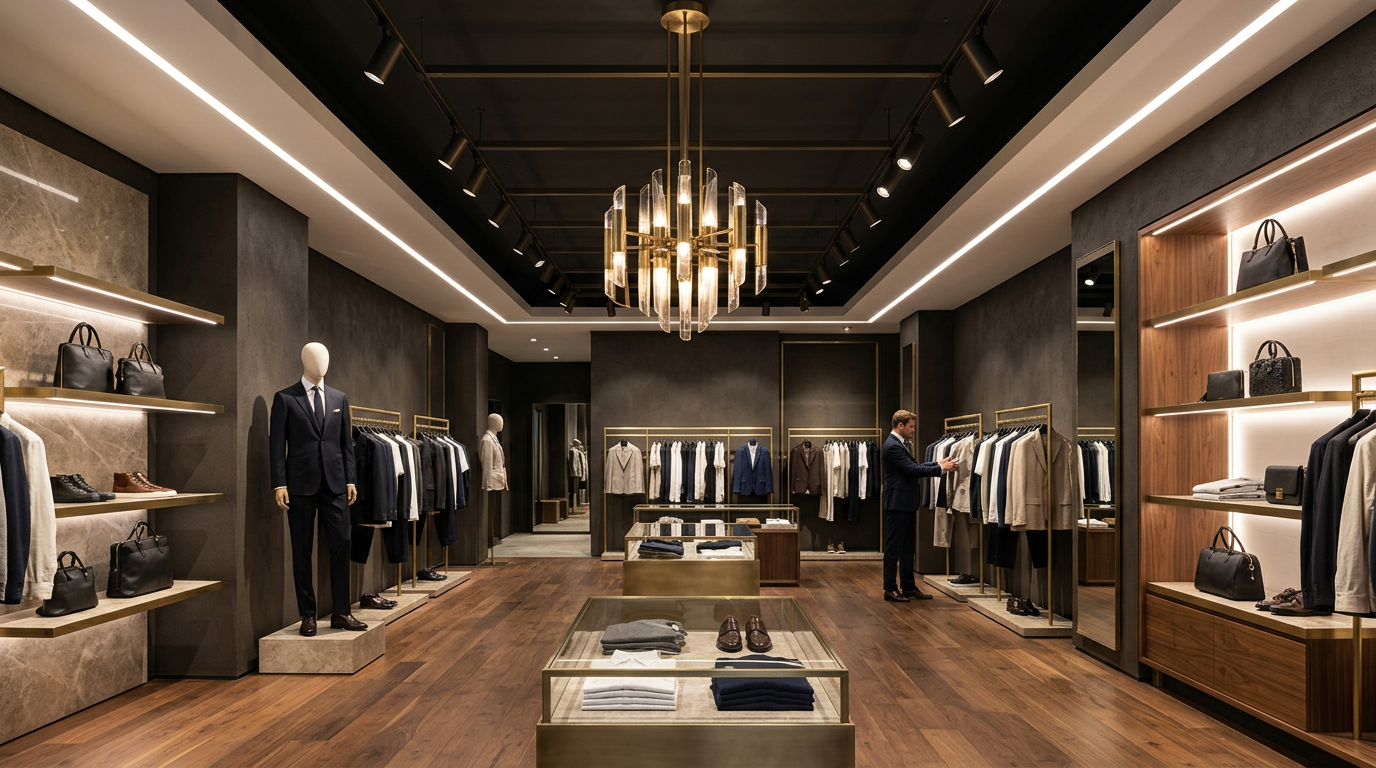
Retail lighting is far more than just illuminating a shop floor. The right retail lighting design can highlight products, improve the shopping experience, but most importantly influence customer emotions, and increase sales. Whether you operate a fashion boutique, supermarket, or luxury retail showroom, lighting plays a critical role in shaping how customers interact with your space.
In this guide, we explore how lighting affects retail sales, the best lighting strategies for retail environments, and practical shop lighting ideas that can help retailers create engaging and profitable spaces.
Why Lighting is Critical in Retail Spaces
Lighting is one of the most powerful visual merchandising tools available to retailers. Customers make subconscious judgments about your store within seconds of entering, and lighting heavily influences those impressions.
A well-designed retail lighting scheme can:
-
Create a welcoming atmosphere
-
Encourage customers to stay longer
-
Direct attention to featured products
-
Improve product appearance
-
Strengthen brand identity
-
Increase perceived product value
-
Support customer comfort and navigation
Poor lighting, on the other hand, can make products appear dull, create uncomfortable glare, and reduce customer engagement.
For modern retailers, using professional retail lighting design ideas to their advantage is no longer optional, it is essential for competitiveness.
How Lighting Influences Customer Buying Behaviour
Research consistently shows that lighting directly impacts shopper behaviour and purchasing decisions. Brightness, colour temperature, contrast, and colour rendering, they all affect how customers perceive products and spaces.
Lighting can influence:
-
Mood and emotion — Warm lighting creates comfort and relaxation, while cooler lighting promotes alertness and focus.
-
Product perception — Correct lighting enhances colours, textures, and details.
-
Customer flow — Strategic lighting guides shoppers through key areas of the store.
-
Purchase intent — Highlighted products naturally attract more attention and impulse purchases.
Retailers looking for lighting to increase sales should focus on creating layered lighting schemes that combine functionality with visual impact.
Types of Retail Lighting
Good retail lighting design uses several layers of light working together.
1. General Lighting
General lighting provides overall illumination throughout the store. It ensures customers can move comfortably and safely through the space.
Popular options include:
-
Track lighting
-
Linear lighting systems
-
Recessed downlights
-
LED panel lights
The best lighting for retail stores often uses energy-efficient LED lighting that provide even illumination with minimal maintenance.
2. Accent Lighting
Accent lighting draws attention to specific products, displays, or promotional areas.
Examples include:
-
Adjustable spotlights (up lights or downlights)
-
Track-mounted LED spotlights
-
Display cabinet lighting
-
Shelf lighting (LED tape)
Accent lighting creates contrast and visual hierarchy, helping retailers guide customer focus to high-value products.
3. Task Lighting
Task lighting supports areas where detailed visual activities occur, such as:
-
Checkout counters
-
Customer service desks
-
Product demonstration areas
Good task lighting improves visibility and enhances customer experience.
4. Feature Lighting
Feature lighting is the lighting that stands out. It is the lighting people remember. It adds personality and reinforces brand identity. This could be decorative lighting or architectural lighting. Feature lighting is often large, as it needs to fill the space and make an impact.
Examples include:
-
Pendant lighting
-
Feature chandeliers
-
LED neon signage
-
Statement fixtures
Decorative elements help create memorable retail environments that customers associate with your brand.
Key Retail Lighting Techniques to Boost Sales
1. Highlight High-Margin Products
One of the most effective retail store lighting tips is to use brighter accent lighting on premium or high-margin items.
Customers naturally look toward brighter focal points, making illuminated products appear more important and desirable.
Best practices:
-
Increase brightness levels slightly above ambient lighting
-
Use adjustable spotlights
-
Create visual contrast around promotional displays
2. Use Contrast to Guide Customers
Contrast is essential in retail lighting design. Variations in brightness help direct customers through the store journey.
Retailers can use contrast to:
-
Lead customers toward featured zones
-
Draw attention to seasonal displays
-
Create depth and visual interest
Without contrast, stores can appear flat and uninspiring.
3. Optimize Lighting for Product Categories
Different products require different lighting strategies.
Examples:
-
Fashion stores benefit from warm, flattering lighting
-
Electronics, jewellery and sportswear stores often use cooler, crisp lighting
-
Grocery stores need lighting with high CRI, to support the colours of the produce.
Customising retail lighting design ideas by product category improves product appeal and customer confidence.
4. Use Advantage of High CRI Lighting
CRI (Colour Rendering Index) measures how accurately lighting reveals colours.
High CRI lighting is essential for retail because it:
-
Makes products look more natural
-
Improves colour accuracy
-
Enhances fabric textures and finishes
For most retail applications, a CRI of 90+ is recommended.
5. Use Dynamic & Tuneable Lighting
The Tuneable White technology allows retailers to adjust lighting colour temperature and brightness throughout the day. And so much more.
Dynamic lighting can:
-
Create different moods in different zones
-
Colour change (RGB)
-
Align with natural circadian rhythms
-
Enhance Product Appearance: Different materials and products look more appealing under different light temperatures. Crisp, cool tones (5000K+) make tech products, diamonds, and sportswear pop. Warmer, softer tones (2700K–3000K) bring out the rich textures of natural fabrics, wooden furniture, and food.
-
Dynamic Zoning & Promotions: Tuneable lights allow retailers to energise spaces without rearranging fixtures. A temporary pop-up display or a newly launched collection can be set up with a completely unique colour temperature to draw the eye.
-
Immersive Fitting Rooms Experience: Fashion stores can feature smart lighting controls in dressing rooms. By giving customers a simple light control device, they can change the settings and see how their outfit looks in "office," "evening," or "daylight" settings.
6. Eliminate Glare & Shadows
Glare and harsh shadows create discomfort and reduce product visibility.
To improve the customer experience:
-
Position lights thoughtfully
-
Use diffusers where needed
-
Avoid over-lighting reflective surfaces
-
Balance ambient and accent lighting
Comfortable lighting encourages shoppers to spend more time browsing.
Store Layout & Lighting Design Strategy
Lighting should always support the store layout and customer journey.
A successful retail lighting strategy considers:
-
Entrance impact zones
-
Main customer pathways
-
Product focal points
-
Checkout areas
-
Window displays
Retailers should use layered lighting to create a natural flow throughout the space and highlight the most valuable product.
Key considerations include:
-
Ceiling height and ceiling type
-
Store size
-
Product type
-
Brand identity
-
Customer demographics
Professional planning ensures lighting enhances both aesthetics and functionality.
Lighting for Different Retail Segments
1. Fashion & Clothing Stores
Fashion retailers require flattering, high-CRI lighting that accurately represents clothing colours and textures.
Recommended approach:
-
Warm white lighting (3000K–3500K)
-
Adjustable accent lighting
-
Well-lit fitting rooms
-
Soft, shadow-free mirrors
Lighting strongly influences how customers perceive themselves while trying on clothing.
2. Supermarkets & Grocery Stores
Grocery stores rely on bright, clean lighting that enhances freshness.
Best practices:
-
Cooler lighting for produce sections
-
High uniformity throughout aisles
-
Focused lighting for promotional displays
-
Energy-efficient LED systems
Different departments often benefit from tailored colour temperatures.
3. Electronics Stores
Electronics retailers typically use cooler colour temperatures to create a modern, technology-focused environment.
Effective strategies:
-
Crisp white lighting
-
Integrated display lighting
-
Glare control for screens
-
Feature lighting for premium products
Lighting should support product demonstrations without causing reflections.
4. Luxury Retail Stores
Luxury retail lighting focuses on exclusivity, drama, and sophistication. Many high-end shops are aiming for the bright and airy vibe, inviting customers to browse and allowing them to see the price tags clearly.
Key techniques:
-
Lower ambient lighting levels
-
Focused accent lighting
-
Premium decorative fixtures
-
Layered lighting composition
Luxury environments often use contrast and spotlighting to create perceived value and prestige.
Energy Efficiency & Smart Lighting in Retail
Energy-efficient lighting is increasingly important for retailers looking to reduce operating costs and meet sustainability goals.
LED lighting in retail lighting is a non- negotiable, as it offers:
-
Lower energy consumption
-
Longer lifespan
-
Reduced maintenance
-
Better lighting control
-
Improved sustainability
Smart lighting systems add further benefits through:
-
Motion sensors
-
Automated dimming
-
Scheduling controls
-
Daylight harvesting
-
Remote monitoring
Modern retail lighting solutions can significantly reduce electricity costs while improving performance.
Common Retail Lighting Mistakes to Avoid
Even high-quality fixtures cannot deliver the desired effect if lighting design is poorly planned.
Common mistakes include:
-
Over-lighting the entire store
-
Inconsistent colour temperatures
-
Poor spotlight positioning
-
Excessive glare
-
Insufficient fitting room lighting
-
Ignoring CRI quality
-
Lack of layered lighting
Avoiding these issues helps create a more comfortable and visually effective retail environment.
Measuring the Impact of Lighting on Sales
Retailers should treat lighting as a measurable business investment.
Useful metrics include:
-
Sales performance by display area
-
Customer dwell time
-
Conversion rates
-
Foot traffic patterns
-
Energy consumption
-
Customer feedback
Many retailers find that strategic lighting upgrades deliver measurable improvements in customer engagement and revenue, which is a holy grail of retail.
Future Trends in Retail Lighting
Retail lighting continues to evolve with advances in technology and customer expectations.
Emerging trends include:
-
Human-centric lighting
-
Smart connected lighting systems
-
AI-driven lighting controls
-
Sustainable materials
-
Interactive retail experiences
-
Wireless lighting management
As physical retail competes increasingly with online shopping, immersive in-store experiences will become even more important.
FAQs
What is the best lighting for retail stores?
The best lighting for retail stores combines general, accent, task, and feature lighting using high-quality LED fixtures with high CRI values.
What colour temperature is best for retail lighting?
It depends on the retail sector:
-
Warm white (3000K–3500K) suits fashion and luxury stores
-
Neutral white (4000K) works well for general retail
-
Cooler white (5000K+) is often used in electronics, sportswear and supermarkets
Why is CRI important in retail lighting?
High CRI lighting accurately displays product colours and textures, helping customers make confident purchasing decisions.
Upgrade Your Retail Lighting Strategy
Effective retail lighting design is one of the most powerful tools available to modern retailers. By combining layered lighting, strategic product highlighting, high CRI illumination, and smart controls, retailers can create engaging shopping environments that improve customer experience and increase sales.
Whether you are planning a new retail fit-out or upgrading an existing store, investing in professional retail lighting solutions can deliver long-term commercial benefits.