What is UGR in Lighting? How to Reduce Glare in Offices
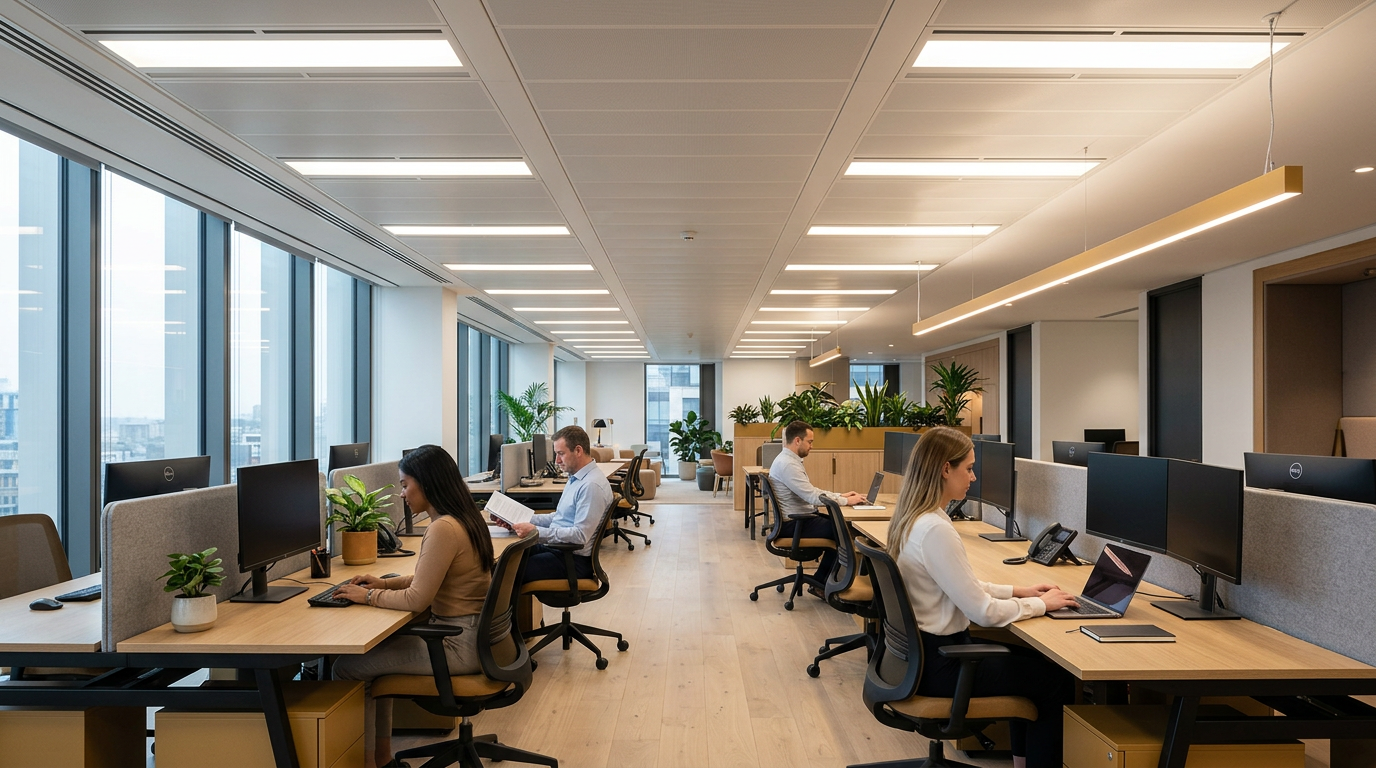
When designed well, lighting plays a crucial role in workplace comfort, productivity, and wellbeing. One of the most common complaints in office environments is glare, harsh or excessive brightness that causes visual discomfort and eye strain.
Glare is a critical factor in workplace lighting design and, while it may be experienced subjectively, it is objectively measurable and controllable using established metrics such as the Unified Glare Rating (UGR).
Understanding the UGR lighting meaning allows designers, contractors, and businesses to create compliant, comfortable environments. This guide explains what is UGR in lighting, why it matters in offices, and how to implement effective glare control lighting strategies.
What is UGR in Lighting?
UGR (Unified Glare Rating) is a quantitative method used to assess the level of glare produced by a lighting installation. Defined within the European standard EN 12464-1, it provides a consistent way to measure visual discomfort caused by lighting in a specific environment and is one of the key lighting standards used in the UK.
Rather than relying on subjective opinion, UGR calculations consider factors such as:
• Luminaire brightness
• Viewing angles
• Room dimensions
• Background luminance
The UGR scale typically ranges from 10 to 30:
• Low UGR (≤16): Minimal glare, very comfortable
• Moderate UGR (17–19): Acceptable for most office tasks
• High UGR (≥22): Noticeable glare, can cause discomfort
In simple terms, the lower the UGR value, the less glare a lighting installation produces. When people ask “what is UGR in lighting”, the answer is essentially: a way to quantify how visually comfortable a lighting system is.
Crucially, it’s important to understand that:
UGR is not a fixed property of a single luminaire.
Instead, it relates to the entire lighting installation and is calculated based on:
• Luminaire luminance (brightness)
• Position of fittings relative to the observer
• Room size and geometry
• Surface reflectance (walls, ceilings, floors)
• Background luminance
This means the same luminaire can produce different UGR values depending on how and where it is installed.
Why UGR Matters in Office Lighting
Glare has a direct impact on visual performance and employee wellbeing. Because UGR provides an objective measurement, it allows lighting designers to control and minimise these effects systematically.
Poor glare control can result in:
• Eye strain and visual fatigue
• Headaches and discomfort
• Reduced concentration
• Lower productivity and increased errors
Daylight should also be considered as part of an overall office lighting glare reduction strategy, as uncontrolled natural light can significantly contribute to glare.
Specifying low UGR lighting for office environments ensures both compliance and long-term comfort, but it must be combined with a well-considered lighting design.
Recommended UGR Levels for Offices (UK Standards)
According to UK and European standards (EN 12464-1:2021), the recommended UGR rating for offices is:
• UGR ≤19 for general office work (e.g. desks, computer use)
• UGR ≤16 for more visually demanding tasks (e.g. technical drawing)
These limits ensure that lighting does not cause discomfort for employees working long hours under artificial light. When specifying lighting, always check the UGR rating to ensure compliance and comfort.
These values are based on controlled calculations of the full lighting scheme, not individual fittings, ensuring consistent visual comfort across the space.
What Causes Glare in Offices?
Glare occurs when there is excessive contrast between bright light sources and their surroundings. In offices, this is often the result of poor lighting design rather than the luminaires themselves.
Common causes include:
• Incorrect luminaire placement within the field of view
• High luminance from exposed light sources
• Reflections on screens and glossy surfaces
• Inappropriate mounting heights
• Poor coordination between lighting and workstation layout
Understanding these factors is essential for effective glare control lighting.
Types of Glare
There are two main types of glare encountered in office environments:
1. Discomfort Glare
This is the most common type in office environments. It does not necessarily reduce visibility but causes irritation and fatigue over time. UGR is specifically designed to measure this type of glare.
2. Disability Glare
This is more severe and reduces the ability to see clearly, often caused by intense light sources or strong reflections. While less common in offices, it can still occur in poorly designed environments.
How to Reduce Glare in Office Lighting
Effective office lighting glare reduction involves a combination of smart design, daylight control, appropriate light fittings, and correct installation. Here are key strategies:
1. Specify Low UGR Luminaires
Choose fittings designed to support low UGR lighting office requirements, typically with optical control elements such as microprismatic diffusers or louvres. Opal diffusers, while visually soft, typically provide less glare control and are therefore more suited to architectural or decorative spaces rather than task-focused office environments.
2. Design the Full Lighting Layout
Because UGR applies to the entire installation, consider spacing, mounting height, and viewing angles during the design stage, not just the luminaire specification.
3. Optimise Luminaire Positioning
Avoid placing luminaires directly within the normal line of sight or above computer screens. Alignment with workstations is key.
4. Balance Light Levels
Excessive brightness increases glare risk. Ensure appropriate lux levels and uniformity across the space.
5. Control Reflections
Use matte finishes on desks and walls, and position monitors to minimise reflected light from luminaires.
6. Use Indirect or Diffused Lighting
Where appropriate, consider using indirect lighting or well-diffused sources, as this helps reduce contrast and soften the overall visual environment.
7. Integrate Task Lighting
Provide localised lighting where needed, allowing lower ambient levels without compromising usability.
FAQs
What is a good UGR rating for office lighting?
A UGR of 19 or lower is generally recommended for standard office environments in the UK.
What does UGR mean in lighting design?
The UGR lighting meaning refers to a numerical value that indicates how much glare a lighting installation produces.
Is lower UGR always better?
Generally yes, but extremely low UGR may not always be necessary. The goal is to meet recommended standards while maintaining efficient lighting levels.
Is UGR a property of a luminaire?
No. UGR is not a fixed property of a luminaire. It depends on how luminaires are arranged within a space, along with room conditions and viewing angles.
Why can the same light fitting have different UGR values?
UGR is calculated based on the entire environment. Changes in layout, spacing, optics, or room finishes will affect the final rating.
How can I achieve effective glare control lighting?
Take daylight into consideration. Use low UGR luminaires, design the layout carefully, control brightness and reflections, and ensure the installation meets recommended standards.
By understanding what is UGR in lighting and applying effective glare control lighting techniques, businesses can significantly improve workplace comfort and productivity. Investing in lighting design and specification in early project stages ensures not only compliance with standards but also a healthier and more efficient office environment.