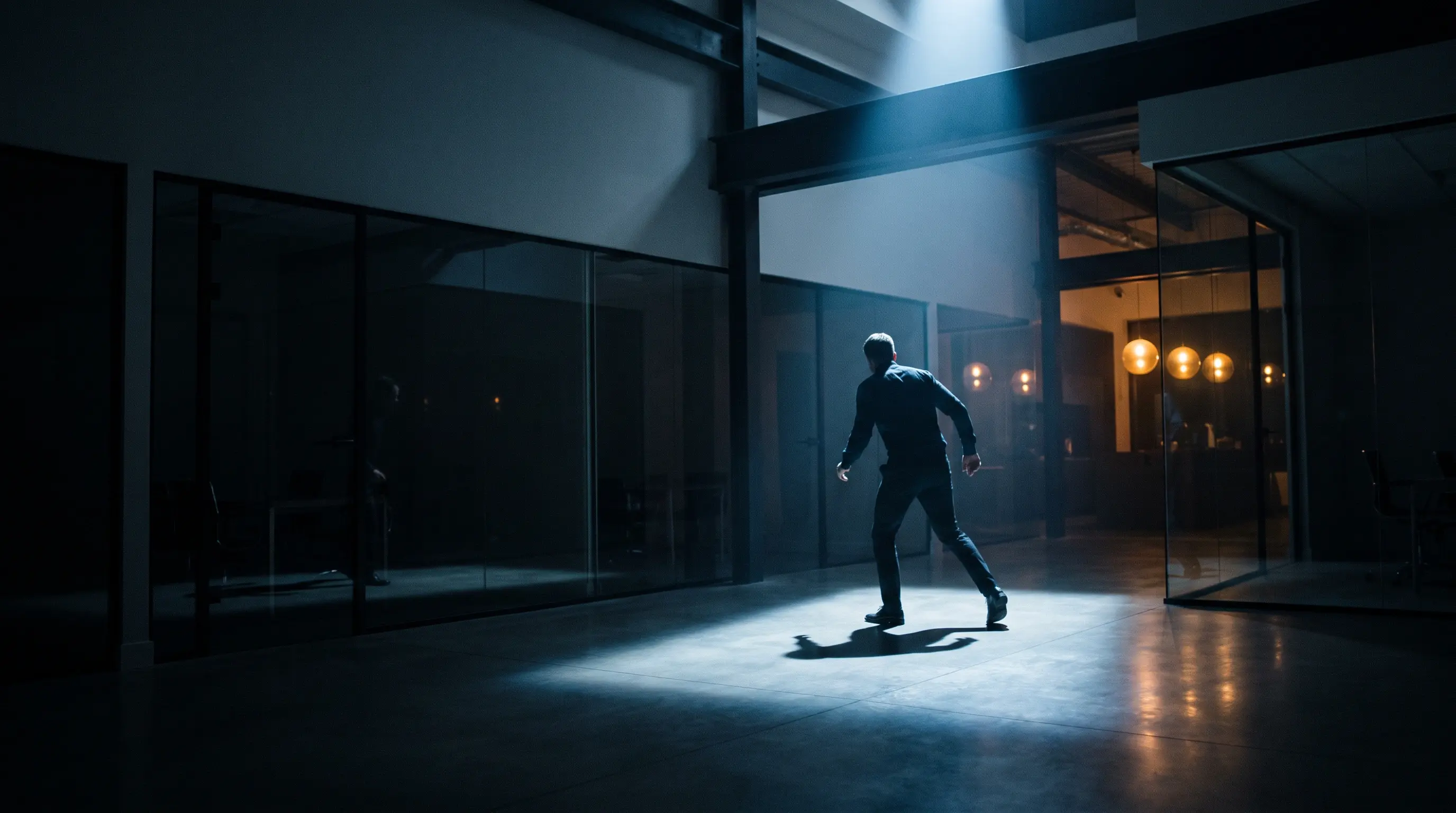
Previous posts in this series have examined how light shapes mood, cognition, sleep, and visual comfort. This post focuses on a different dimension: the relationship between light and the body's physiological stress response. It is an area where the evidence is more nuanced than popular coverage suggests, and where the commercial lighting implications are genuinely significant.
This is the eighth post in our series on Lighting, Health and the Human Mind.
The Body's Stress Architecture
To understand how light interacts with stress, it helps to understand how the body manages it. The primary hormonal stress pathway is the hypothalamic-pituitary-adrenal (HPA) axis, a chain reaction involving three organs that ultimately triggers the release of cortisol from the adrenal glands in response to perceived threat or demand.
Cortisol is often labelled the stress hormone, but this is an oversimplification. It is more accurately described as a hormone of regulation and mobilisation. In appropriate amounts and at the right times of day, cortisol is essential for alertness, immune function, metabolism, and the ability to respond to challenges. Problems arise when cortisol is chronically elevated, suppressed at the wrong times, or poorly timed relative to the body's circadian rhythm. According to the Cleveland Clinic, chronic HPA axis dysregulation is associated with immune dysfunction, metabolic disease, cardiovascular conditions, and mental health disorders, including anxiety and depression.
How Light Regulates the Cortisol Response
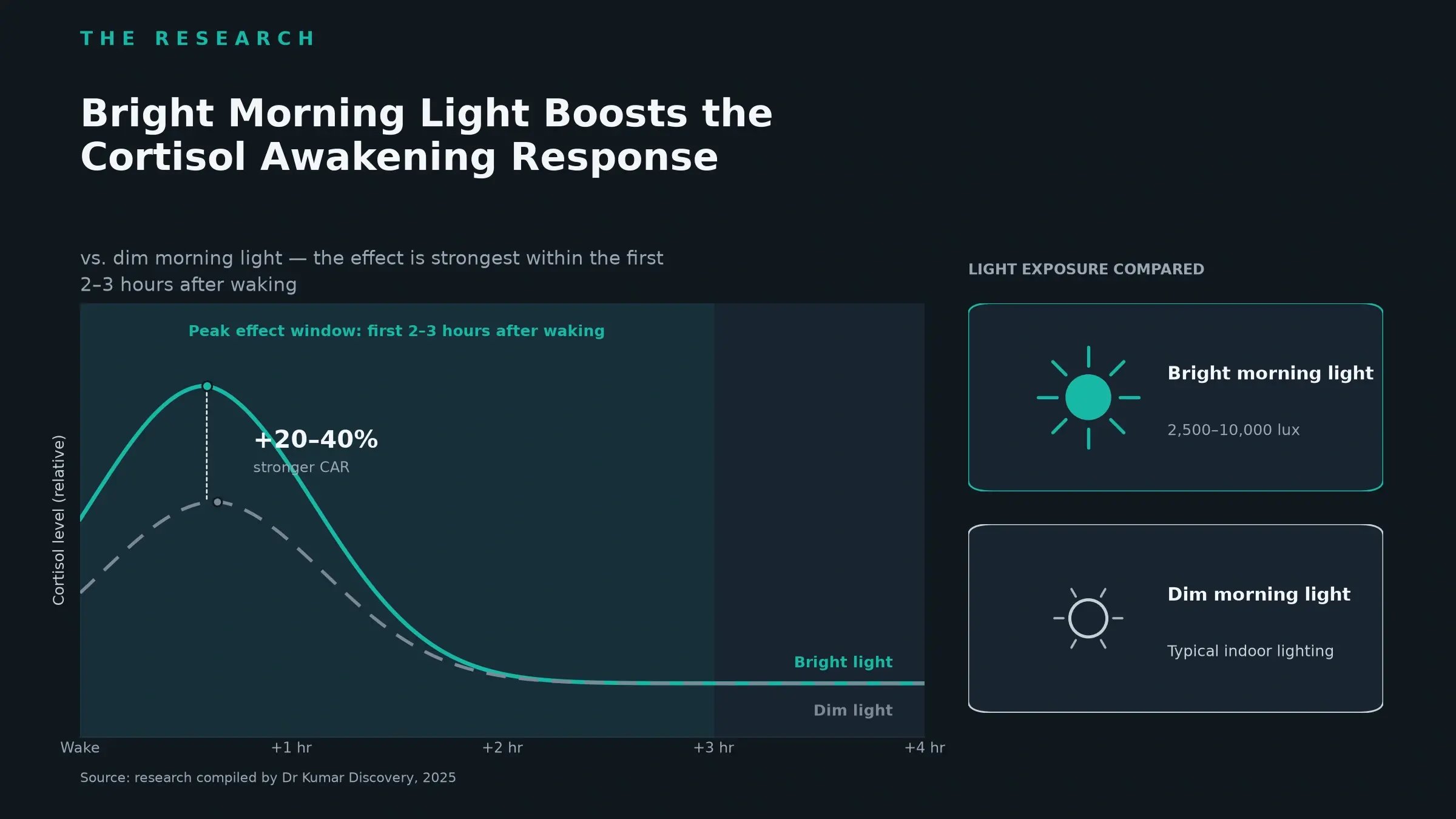
The connection between light and cortisol is real, well-documented, and operates primarily through the circadian system. Light is the dominant timer, the environmental time cue that synchronises the body's internal clock. Because cortisol secretion follows a strong circadian pattern, with a natural peak in the first hour after waking known as the cortisol awakening response (CAR), the quality and timing of light exposure directly shape the daily cortisol profile.
Research compiled by Dr Kumar Discovery in 2025 found that bright morning light exposure, typically 2,500 to 10,000 lux, enhances the cortisol awakening response by 20 to 40% compared with dim morning light. People exposed to bright morning light showed more robust, well-timed cortisol peaks and better-regulated daily hormonal rhythms. Consistent morning light appears to normalise cortisol patterns in people with disrupted stress hormone profiles, with effects that are cumulative over time rather than one-off.
The timing of light matters as much as the intensity. Light received within the first two to three hours after waking produces the strongest effects on the cortisol rhythm. This has direct implications for workplace design: the employee who arrives at a dim, artificially lit desk at 8am is receiving a very different biological signal to the one who has already had meaningful exposure to bright, spectrally appropriate light.
Dynamic Lighting and Stress in the Workplace
A 2020 study in Frontiers in Psychiatry by Zhang and colleagues, which has since been cited over 100 times, examined the effects of dynamic LED lighting on wellbeing and stress in office workers. The findings indicated that dynamic light, lighting that varies in intensity and colour temperature across the working day in a pattern broadly aligned with natural daylight rhythm, has the potential to decrease stress during the day while maintaining productivity. This reinforces the circadian support argument: it is not simply about providing enough light, but about providing light whose qualities change in a way that keeps the body's internal clock synchronised and the cortisol rhythm well-regulated.
A 2022 subjective and objective survey of office lighting published in BMC Public Health and accessible through PubMed Central found that lighting conditions significantly impact workers' health, performance, safety, and job satisfaction. The study confirmed that inadequate or poorly designed lighting creates measurable effects on worker wellbeing beyond mere visual discomfort, a finding consistent with the broader HPA axis literature.
A 2025 study published in Nature Scientific Reports by Canazei and colleagues took an interesting additional direction, demonstrating that light-guided resonant breathing in a workplace setting represented an effective intervention for workplace stress recovery. While this study focused on a combined light-and-breathing protocol rather than ambient lighting alone, it is indicative of the growing interest in using light environments intentionally as part of a workplace wellbeing strategy.
Where the Evidence Is More Cautious
It is important to read this area with some precision. A 2025 systematic review of physical office environments and employee health, published in the Journal of Environmental Psychology by Schuller and colleagues, found less robust evidence of office design effects on physiological stress than on established psychological outcomes. In other words, the research supports the conclusion that poor lighting increases subjectively reported stress and anxiety, and that circadian-aligned lighting supports hormonal regulation but direct causal links between specific commercial lighting installations and measurable HPA axis dysfunction remain harder to establish definitively through controlled trials.
This is an important nuance. The mechanism is credible, the indirect evidence is consistent, and the practical implications are reasonable, but the field is not yet at the stage where clinicians would prescribe a specific correlated colour temperature as a cortisol intervention. What the evidence strongly supports is the principle that lighting that respects circadian biology, avoids chronic circadian disruption, and maintains good visual comfort will reduce the stress burden compared with lighting that does not.
The Role of Poor Lighting as a Chronic Stressor
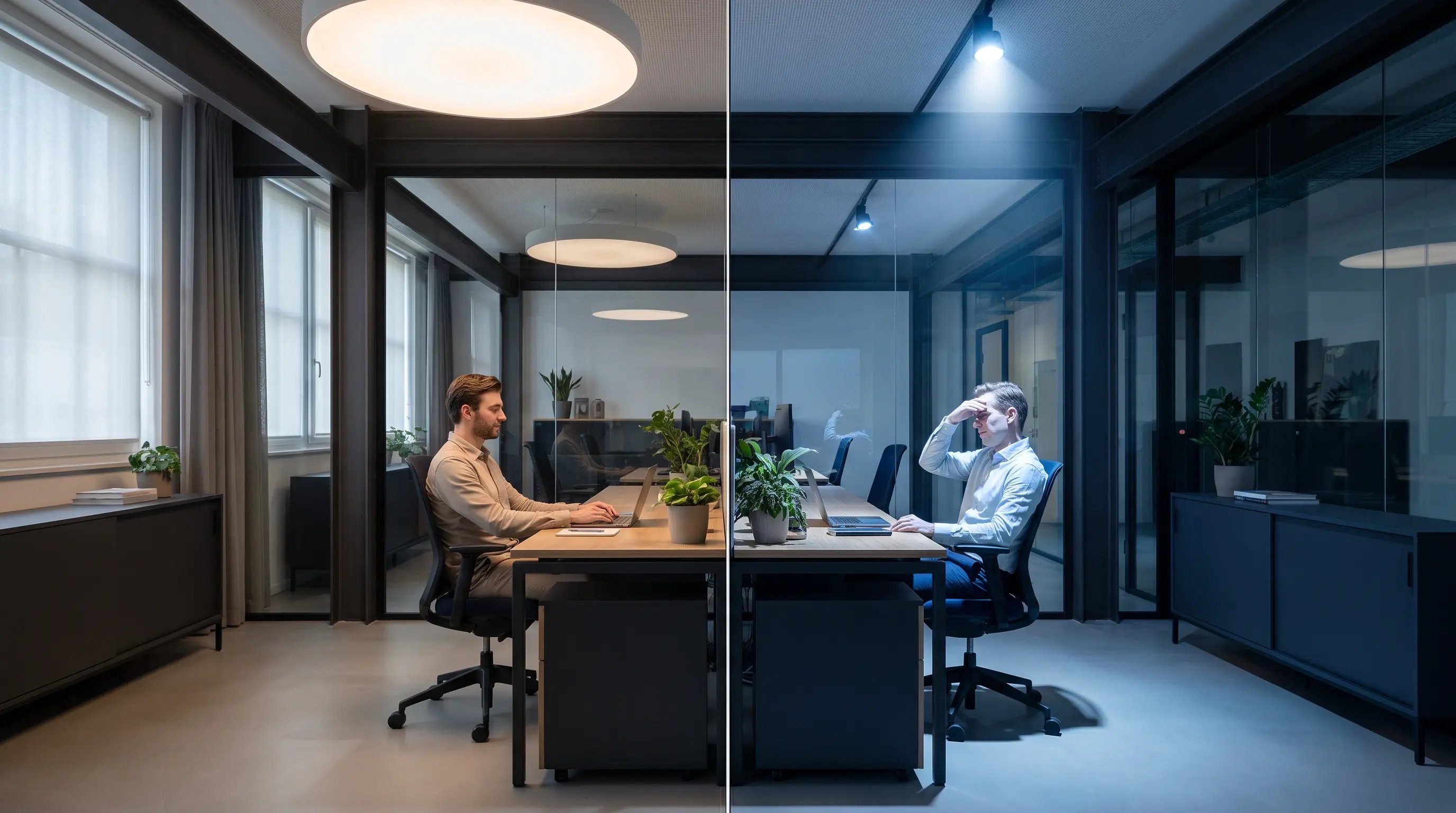
One framing that is both evidence-consistent and practically useful is to think about inadequate or biologically inappropriate lighting not as an acute stressor but as a chronic background stressor, one that contributes to cumulative allostatic load over time rather than producing obvious immediate symptoms.
The Forbes analysis of workplace lighting and mental health noted that bad lighting is associated with a range of ill-health effects including eye strain, headaches, fatigue, stress, and anxiety, and that there is ample evidence that lighting conditions significantly shape workplace wellbeing. A 2023 study in Frontiers in Public Health examining home workspace characteristics found that lighting was one of the physical environmental factors associated with mental health outcomes in knowledge workers, a finding that echoes the broader pattern consistently emerging across different study types and contexts.
The practical implication is not that lighting is the dominant driver of workplace stress. It is that poor lighting is a predictable, modifiable contributor to a stress burden that is already high in most commercial working environments. Removing it, through appropriate lux levels, circadian-aligned dynamic tuning, glare control, and access to daylight, is one of the more accessible levers available to employers and designers.
What This Means in Practice
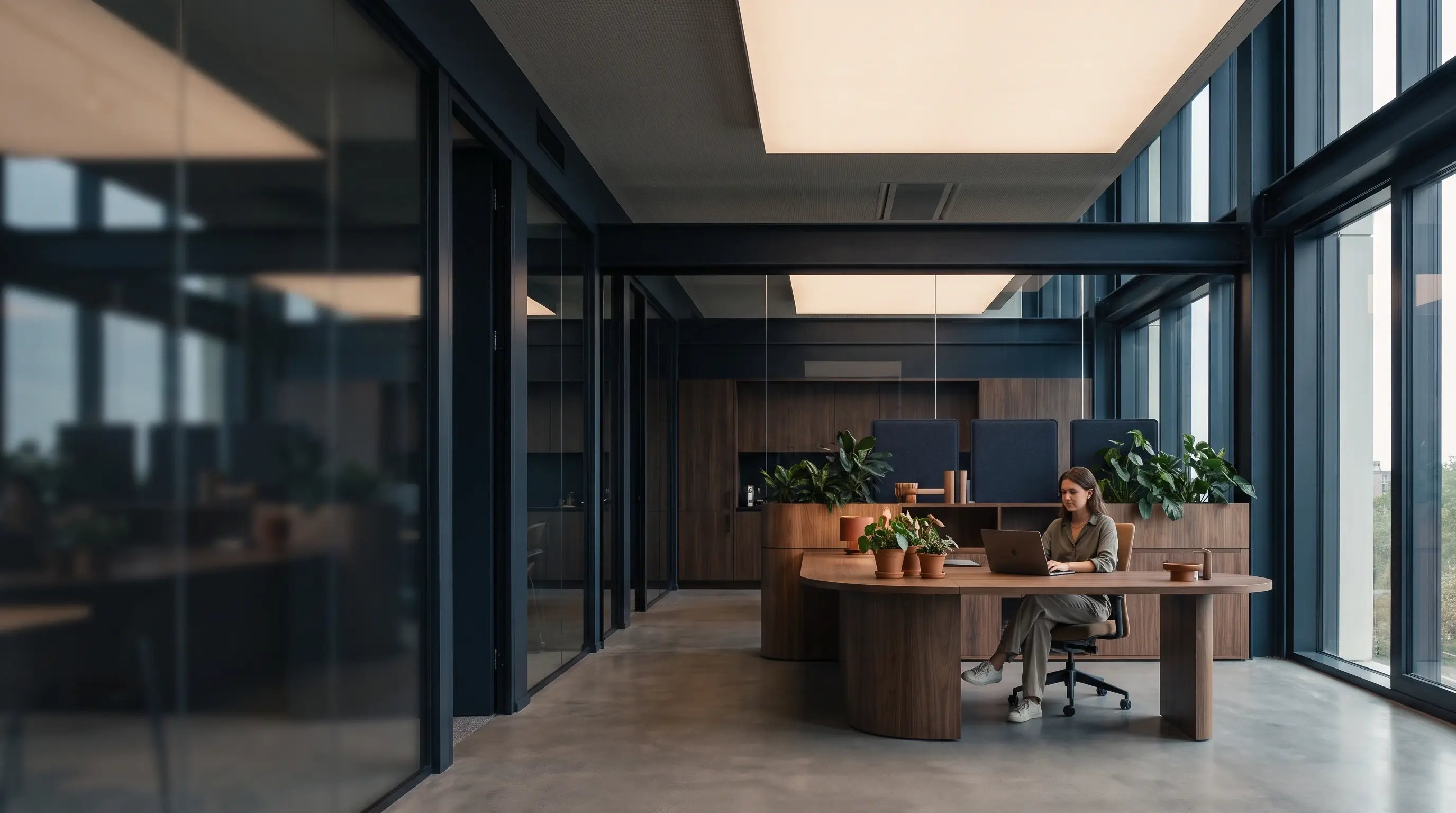
For lighting designers and specifiers working on commercial projects, the stress and cortisol literature converges on a set of practical principles that are consistent with best practice in circadian and visual comfort design:
- Prioritise morning light quality. The first hours of the working day are the most biologically significant for cortisol regulation. Arrival areas, atria, and primary working zones should receive the highest quality light early in the day, whether from well-designed artificial sources with high CCT and adequate illuminance, or from considered daylight access.
- Support circadian rhythm through spectral change. Dynamic lighting systems that reduce CCT and intensity across the afternoon and early evening better support the body's natural cortisol wind-down and melatonin preparation. This is especially relevant in spaces where people work late.
- Treat glare and visual discomfort as stressors. The evidence is clear that visually uncomfortable lighting contributes to stress and fatigue. UGR control, veiling reflection management, and appropriate luminance ratios are not peripheral comfort details, they are part of the stress mitigation brief.
- Prioritise daylight access where possible. The Frontiers in Sustainable Cities 2021 review found that access to daylight and views improves workers' physical and psychological health. This remains one of the strongest and most consistent findings in the entire built environment and wellbeing literature.
For practical guidance on office design and dynamic controls, see our Office Lighting Design Guide and our article on DALI vs 0–10V vs Smart Lighting.
What Comes Next
The next post in this series will examine the relationship between lighting and mental health conditions more directly: looking at what the clinical evidence says about light therapy, seasonal affective disorder, depression, and anxiety, and how these findings translate into design and specification decisions for commercial interiors.