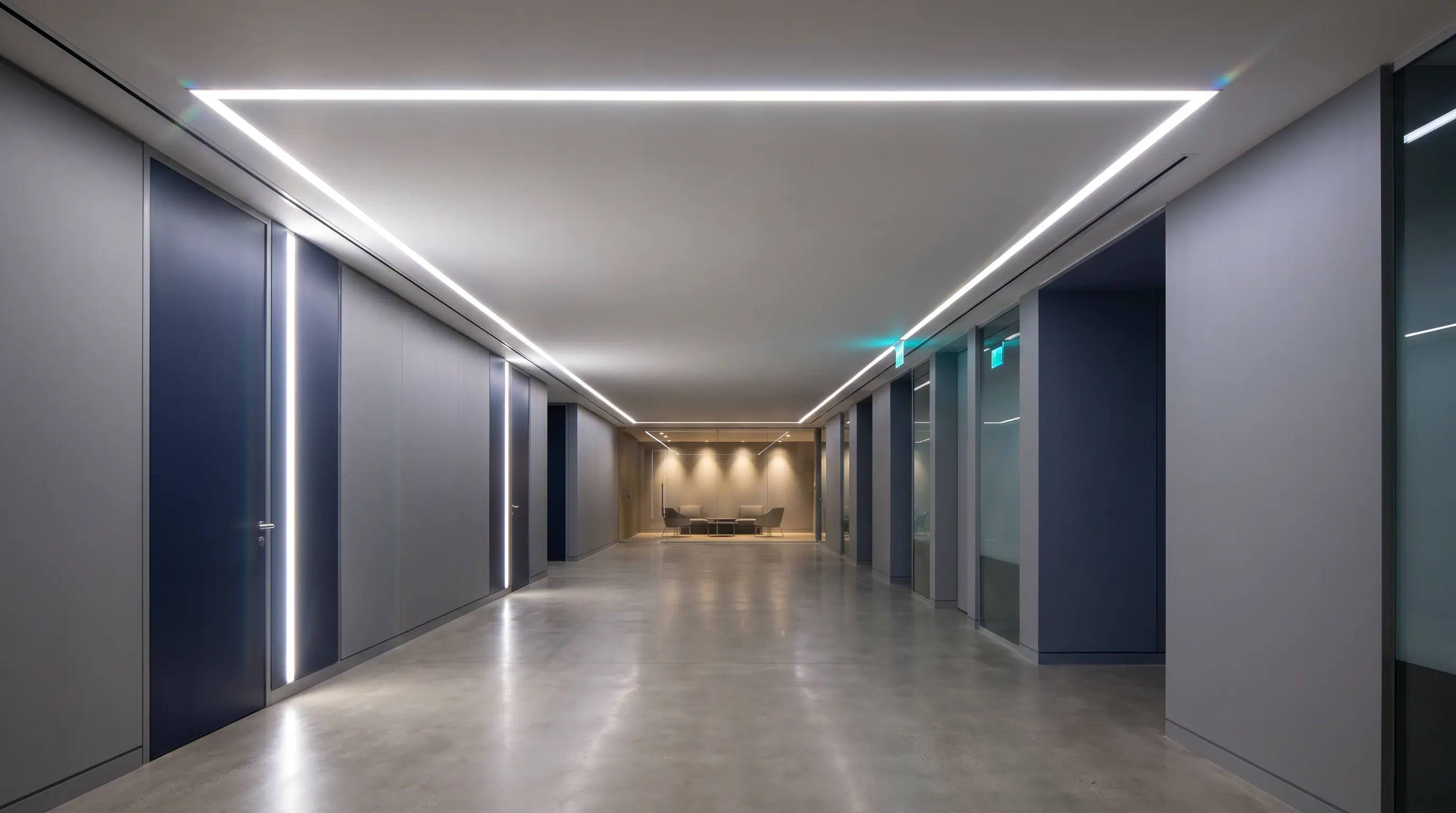
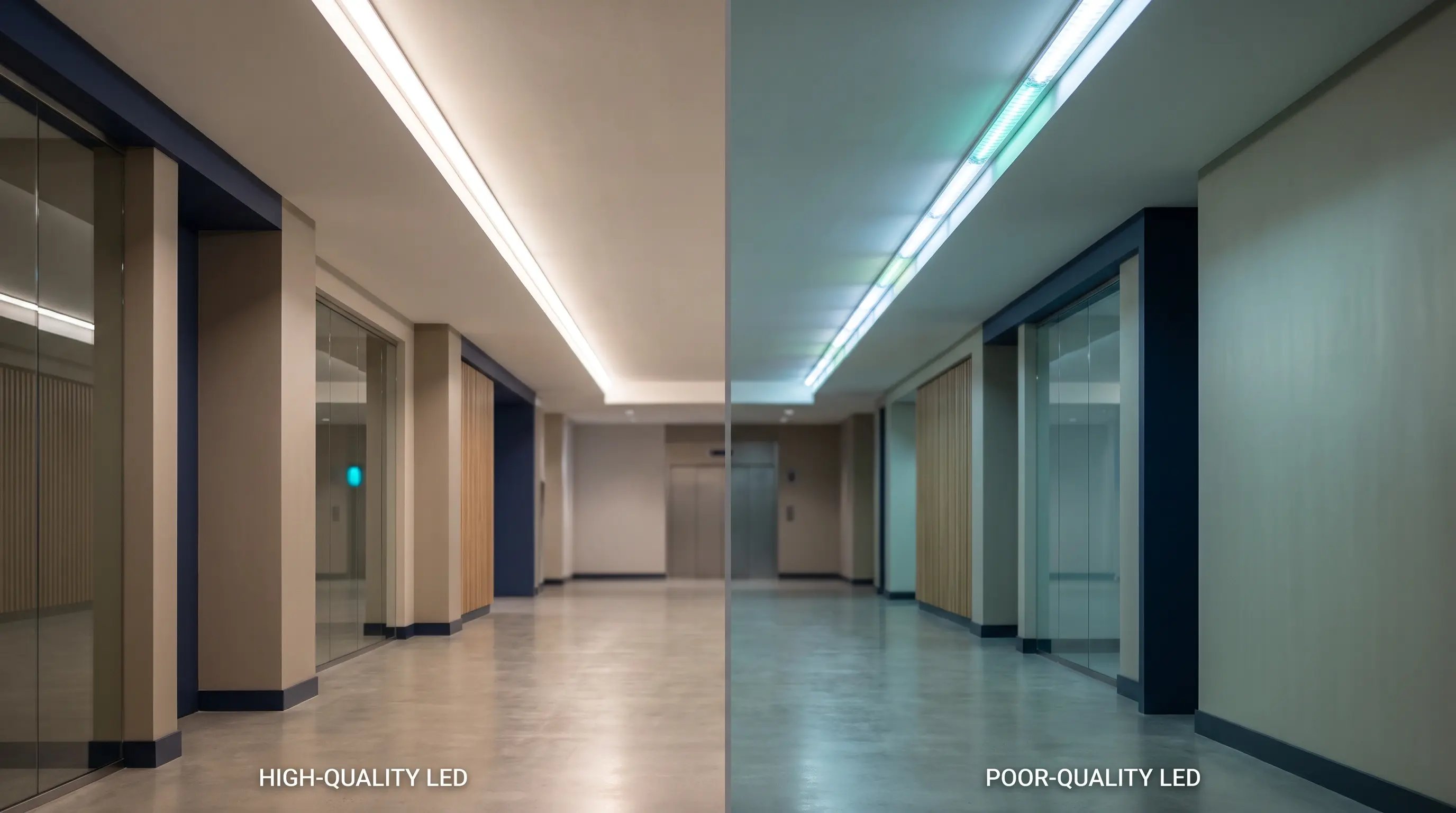
The LED lighting market is vast and deeply uneven. At one end, you have rigorously tested, long-life products backed by independent performance data. At the other, you have fittings that meet the same basic description on paper but fail within a few years, shift colour unpredictably, or produce light that looks inconsistent across a ceiling grid.
For a specifier or designer, knowing how to tell the difference is one of the most valuable skills you can develop. This guide explains the three most important quality indicators for LED luminaires, LM79, LM80, and MacAdam ellipses, and shows you what to look for when evaluating products for a commercial project.
If you are not yet familiar with how performance metrics appear in a lighting specification, it is worth reading How to Read a Lighting Specification: A Beginner's Guide for Designers first.
Why LED Quality Varies So Much
LED technology itself is mature and well understood. The variation in quality is not primarily about the technology; it is about the components used, the testing carried out, the driver quality, and the manufacturing process.
A luminaire that uses a lower-grade LED chip, a cheap driver with poor thermal management, and minimal quality control can be described as an LED product in exactly the same terms as one that uses premium components and has been through independent laboratory testing. Without knowing what to ask for, it is easy to specify the former when you think you are getting the latter.
The three frameworks below give you the tools to ask the right questions.
LM79: Measuring Initial Performance
LM79 is a testing standard published by the Illuminating Engineering Society (IES) that defines how to measure the initial photometric performance of an LED luminaire. It covers total lumen output, luminous efficacy (lumens per watt), colour characteristics, and electrical power consumption.
When a manufacturer publishes a datasheet showing lumen output, efficacy, and colour data, those figures should be based on LM79 testing conducted under standardised conditions in an accredited laboratory. The test is carried out on a complete luminaire, not just the LED chip, which means it reflects the actual output you will get from the product as installed.
LM80: Measuring How Fast an LED Degrades
All LED light sources lose brightness over time. LM80 is the standard that measures this degradation, known as lumen depreciation, under controlled conditions.
An LM80 test runs the LED light source for a minimum of 6,000 hours, and ideally 10,000 hours or more, recording lumen output at regular intervals to plot a depreciation curve. This data is then used as the input for a projection method called TM-21, which models how the LED will continue to depreciate beyond the test period.
The key output from this process is the L70 lifespan, which is the point at which the LED has depreciated to 70 percent of its original lumen output. A well-specified commercial LED product should have a projected L70 lifespan of 50,000 hours or above. Budget products often do not, and the absence of LM80 data is itself a warning sign.
For specifiers, L70 lifespan matters not just for longevity but for maintenance planning. A product rated to 50,000 hours at typical operating hours will serve a commercial building for many years without replacement. A product with an undisclosed or short L70 lifespan will require replacement sooner than the client expects, creating maintenance costs and disruption that could have been avoided at the specification stage.
MacAdam Ellipses: The Colour Consistency Problem
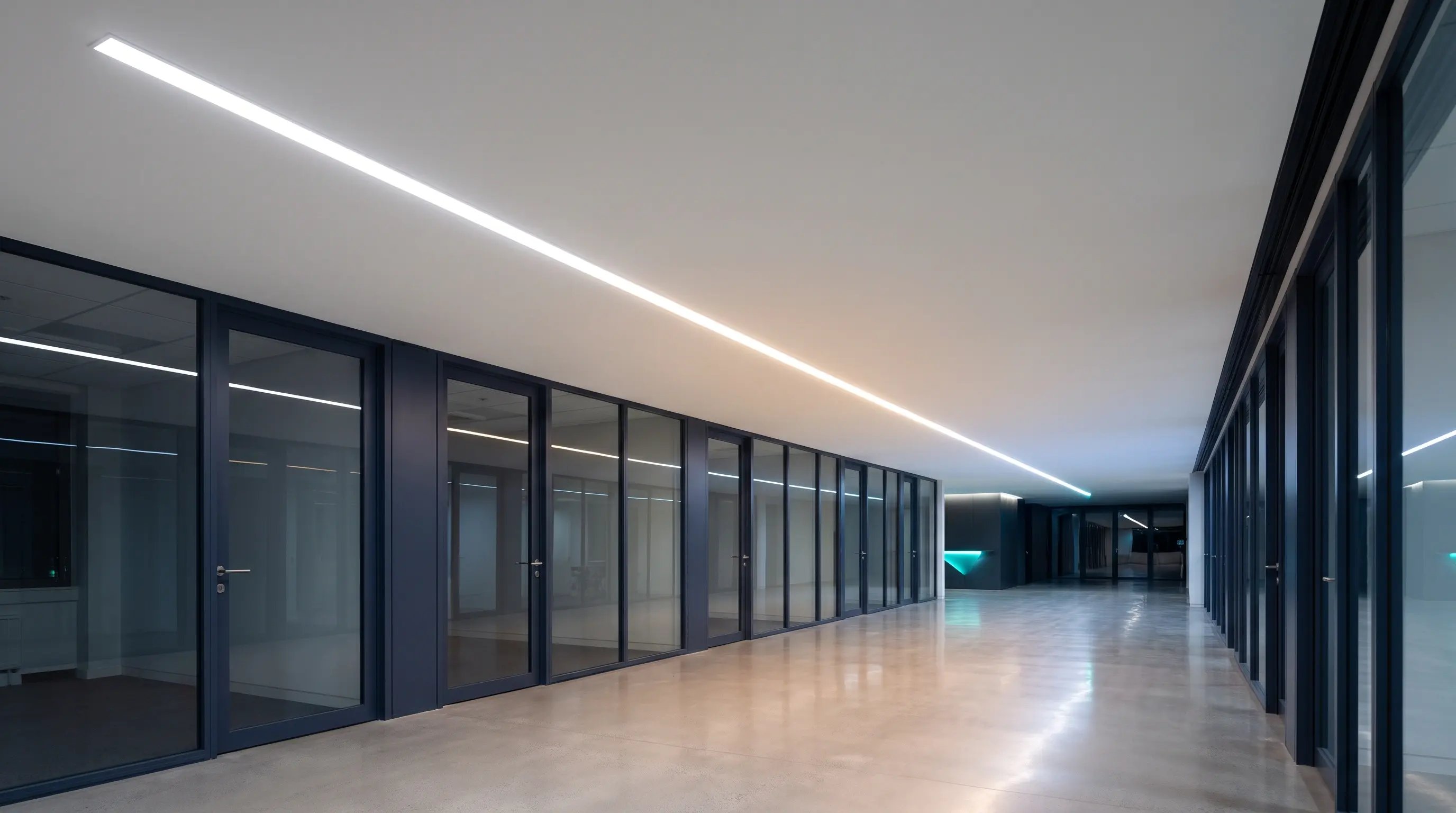
Even LED products from the same manufacturer, specified at the same nominal colour temperature, for example, 4000K, do not always look identical. There is inherent variation in the manufacturing process of LED chips, which means that individual LEDs within the same batch will produce slightly different colour outputs.
This variation is measured using MacAdam ellipses. A MacAdam ellipse defines a region on a colour diagram within which colour differences are imperceptible or barely perceptible to the human eye. The number of MacAdam steps describes how large that region is: a one-step MacAdam ellipse means the colour variation is essentially invisible, while larger step counts mean increasingly noticeable differences.
In practice, the step count that matters for commercial interiors is as follows:
- 1 to 2 steps: Colour variation is imperceptible. Appropriate for high-end hospitality, retail, and premium commercial interiors where consistency is critical.
- 3 steps: Very minor variation, generally acceptable for most commercial and office environments. This is the standard benchmark for quality commercial specification.
- 4 to 5 steps: Noticeable variation, particularly visible when luminaires are installed side by side. Common in lower-cost products.
- Above 5 steps: Clearly visible colour inconsistency across a ceiling grid. Not appropriate for professional commercial use.
The consequences of poor MacAdam step performance are most visible in grid-ceiling office installations, hospitality settings, and any environment where luminaires are viewed together across a flat plane. A ceiling that looks patchy, with some fittings appearing visibly warmer or cooler than their neighbours, is usually the result of inadequate colour binning, fitting multiple MacAdam step products together.
LED Flicker: A Separate but Related Quality Indicator
Flicker refers to rapid, cyclic variation in the output of a light source. In low-quality LED drivers, the current supplied to the LED chip fluctuates, causing the light to vary in intensity at a rate that may be imperceptible to the naked eye but is detectable by cameras and potentially problematic for people with photosensitive conditions.
High-quality LED drivers eliminate meaningful flicker. When evaluating a product, look for flicker percentage and frequency data in the driver specification. Products that do not publish this data are worth treating with caution in environments where visual comfort is a priority.
For more on flicker and its implications for occupant health and well-being, see "Flicker in LED Lighting."
What to Ask Your Supplier
When specifying LED luminaires for a commercial project, these are the data points worth requesting before committing to a product:
- LM79 test report confirming initial lumen output, efficacy, and colour data.
- LM80 data with TM-21 projected L70 lifespan at the operating temperature relevant to the luminaire.
- MacAdam step rating, typically expressed as SDCM (Standard Deviation of Colour Matching). Request a maximum of 3-step for standard commercial work, or 2-step for hospitality and high-end interiors.
- Driver flicker percentage and frequency data.
- Warranty terms, noting what is and is not covered and for how long.
A reputable supplier will have all of this available and will provide it without hesitation. A supplier who cannot produce LM79 and LM80 data for a product they are proposing for a commercial project is, in effect, asking you to take their word for performance claims that have not been independently verified.
How This Connects to CRI
LM79, LM80, and MacAdam steps describe performance and consistency. CRI describes colour quality. They are separate indicators, but they are all relevant to the same underlying question: will this product perform as expected, and will it continue to do so over the life of the installation?
A product can have strong LM79 data and poor CRI. It can also have a good initial CRI that degrades faster than the LM80 data would suggest because of the LED chip quality. For thorough specification, you need to consider all of these dimensions together rather than in isolation.
For more on CRI and how it affects different commercial environments, see CRI Explained: Why Colour Rendering Matters in Commercial Lighting.
Why This Matters for Commercial Projects
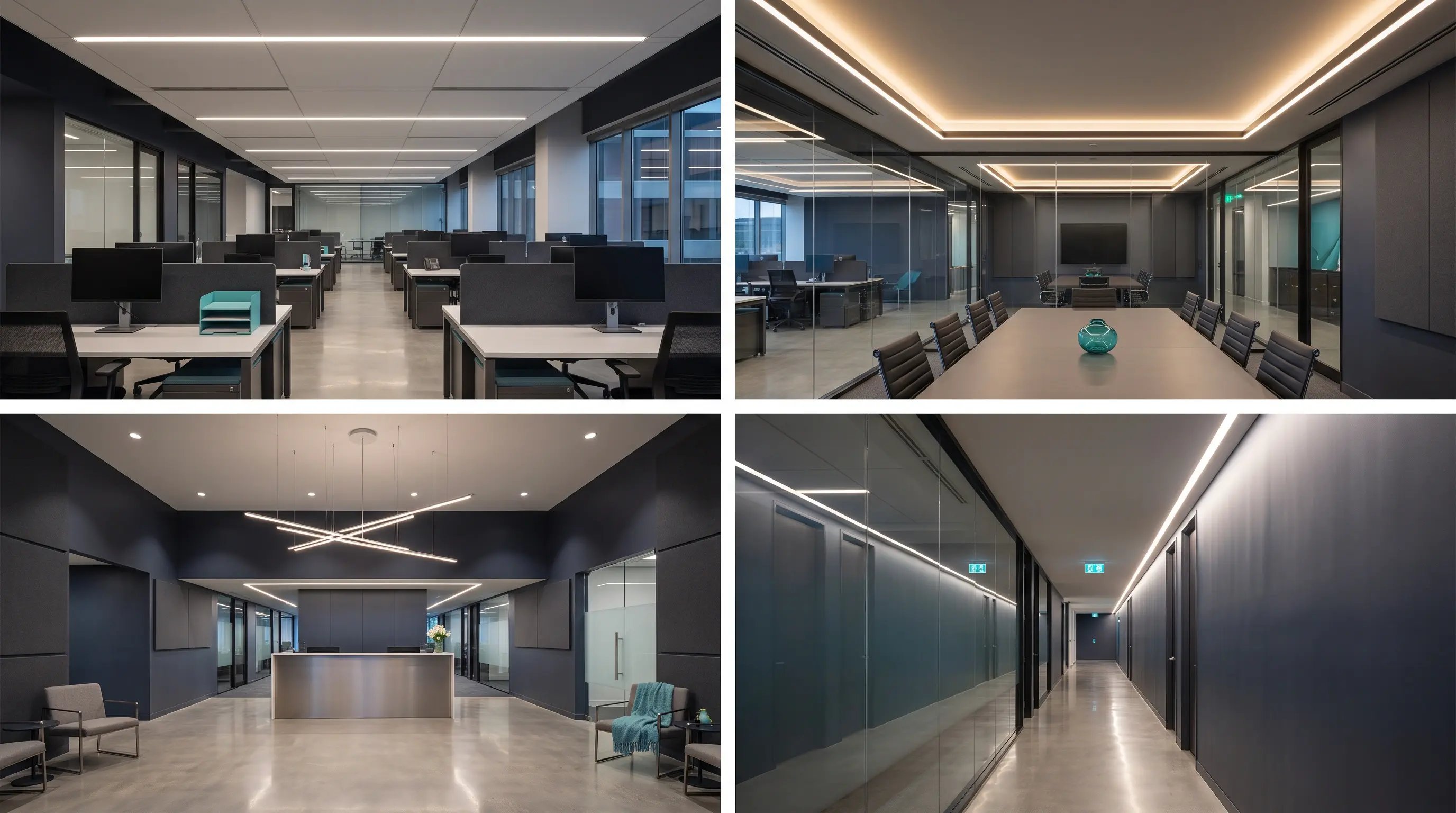
Specifying high-quality LEDs is not about paying more for the sake of it. It is about ensuring the products you specify will perform as expected throughout the building's life, will not create maintenance problems, and will not produce a finished result that looks inconsistent or degrades faster than the client expects.
For architects, interior designers, and project managers, understanding LED quality indicators means you can evaluate supplier proposals with greater confidence and make better-informed decisions when comparing products at different price points. The gap between a strong-performing product and a weaker one is not always reflected in the price. But the consequences, if you get it wrong, tend to show up long after practical completion.
At 299 Lighting, we provide full technical data for every product we specify, including LM79 and LM80 reports and MacAdam step ratings. If you want to discuss product quality for a live project, our team is happy to help.