
If you're early in your career as a lighting designer, interior designer, architect, or specifier, a lighting specification can look like a wall of acronyms, performance figures, and product jargon. But once you understand what each part is trying to tell you, a lighting spec becomes one of the most useful documents in a commercial project.
This guide explains how to read a lighting specification in plain English. It focuses on the metrics and decisions that matter most in real commercial work, including offices, education, gyms, hospitality spaces, and data centres.
If you want a broader overview of commercial lighting design before diving into specification language, start with our Complete Guide to Commercial Lighting Design.
What Is a Lighting Specification?
A lighting specification is the document that defines what a lighting scheme needs to achieve. It usually includes performance criteria, compliance requirements, control strategy, product expectations, and installation constraints, rather than simply listing fittings.
In other words, the specification is not just about choosing a luminaire that looks right. It is about making sure the lighting performs correctly for the tasks in the space, complies with relevant standards, and supports the wider design intent.
On some projects, the specification will be a formal schedule prepared by a lighting designer or consultant. On others, it may be part of an M&E package, architect's performance spec, or contractor-led submittal. Whatever form it takes, the same core principles apply.
Start with the Space and Its Use
Before you look at numbers, start with the purpose of the room. A lighting specification only makes sense when you understand what the space is being used for, who is using it, and what visual tasks need to happen there.
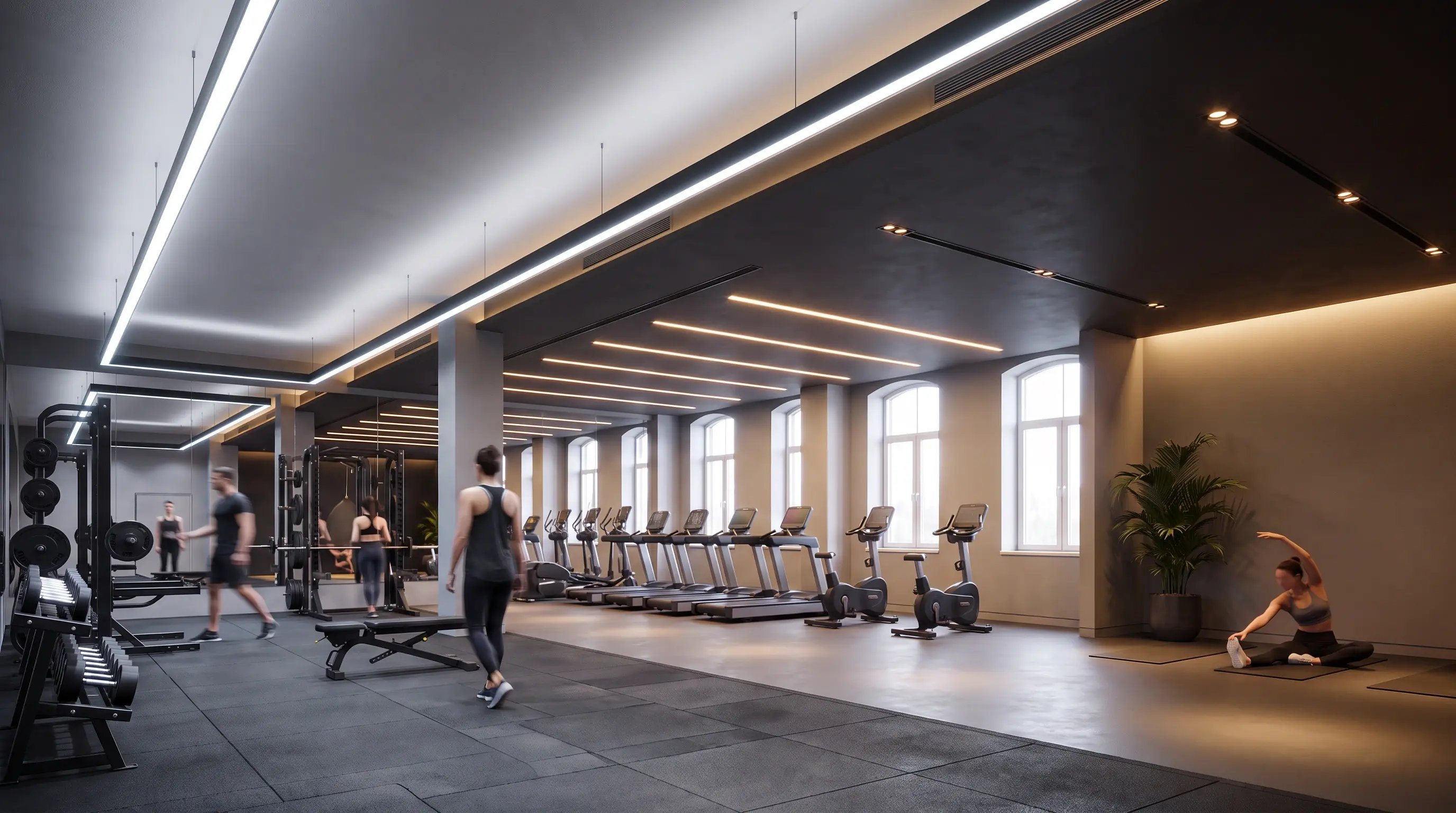
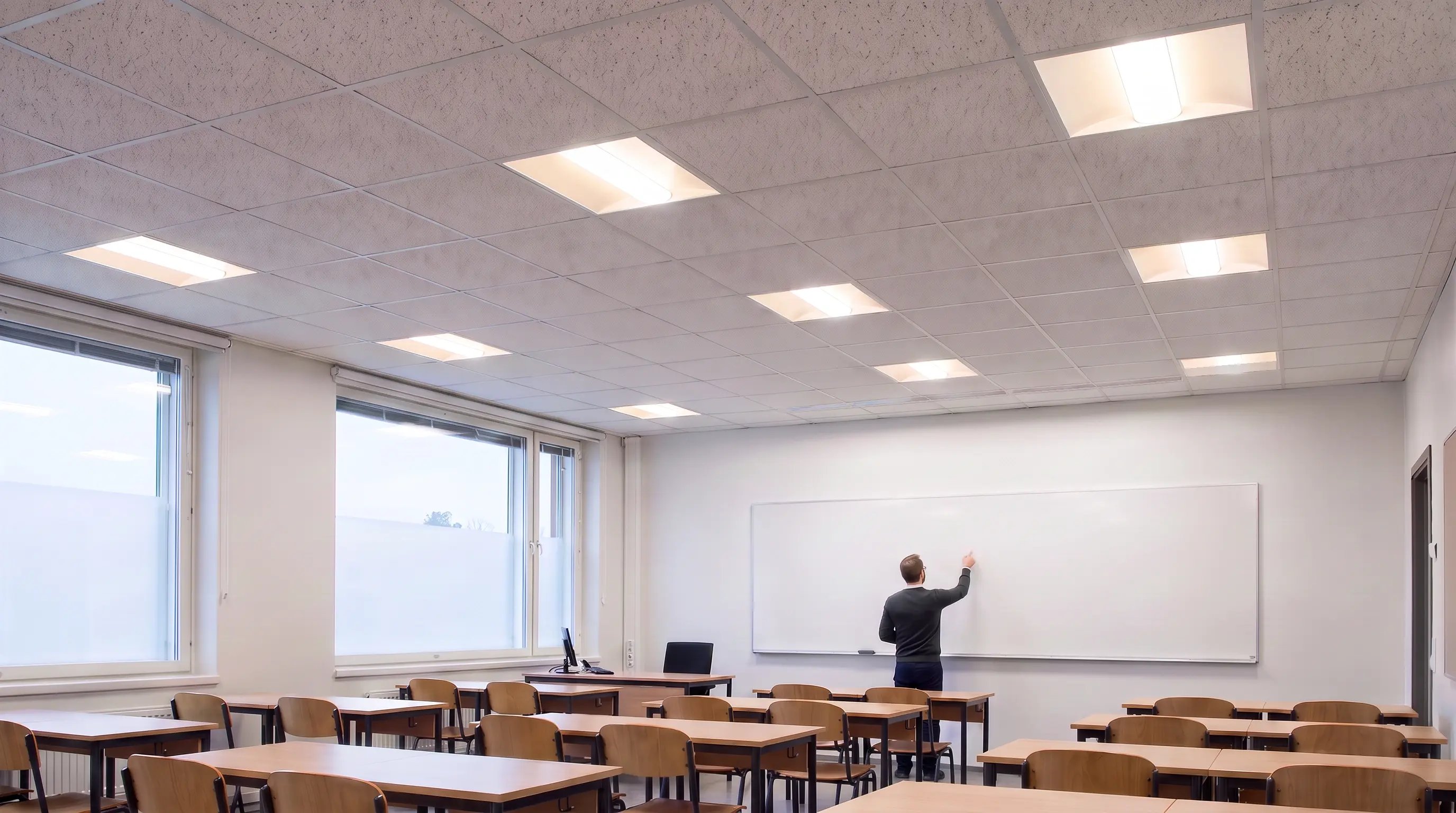
A classroom, for example, needs lighting that supports reading, writing, teaching, and concentration. A hospitality space needs a completely different balance, where atmosphere, material warmth, and guest experience matter just as much as visibility. A gym needs robust, energising light, while a data centre needs reliable illumination for maintenance and safety tasks.
This is why experienced specifiers do not read a lighting schedule in isolation. They cross-check it against the drawings, reflected ceiling plans, room data sheets, and the client's brief.
Understand the Main Performance Metrics
Lux Levels
Lux tells you how much light reaches a surface. This is usually the first figure people notice in a specification, and for good reason: it is one of the clearest indicators of whether a space will be usable for its intended task.
Typical commercial examples include around 300 to 500 lux for offices, around 500 lux for many teaching environments, lower levels for circulation areas, and task-driven requirements in technical environments. These figures should always be read in context, because the correct target depends on the applicable guidance, the activity, and the expected visual comfort.
For more on workplace expectations, see our Office Lighting Design Guide and our article on Office Lighting Regulations and How to Comply.
Uniformity
Good lighting design is not just about hitting an average lux figure. Uniformity tells you how evenly that light is distributed across the working area.
A space can meet the average target on paper and still feel patchy, uncomfortable, or visually inconsistent if the uniformity is poor. When reading a specification, check whether it refers only to average illuminance or whether it also sets a target for uniformity. The better specifications do both.
Colour Temperature
Colour temperature is measured in Kelvin (K), and it describes whether the light appears warm, neutral, or cool. This has a major effect on the feel of the space.
Warm white lighting, typically around 2700K to 3000K, is common in hospitality and other more relaxed environments. Neutral to cooler whites, often around 3500K to 4000K, are more typical in offices, education, and many general commercial interiors. In a specification, colour temperature should support both the task and the mood the client wants to create.
CRI
CRI stands for Colour Rendering Index. It measures how accurately a light source reveals colours compared with a reference source.
This matters more than many junior designers initially realise. In hospitality, retail, education, and wellness-led environments, poor colour rendering can make finishes, fabrics, food, skin tones, and branded materials look dull or inaccurate. If a specification calls for a minimum CRI, treat it as a core performance requirement rather than a nice-to-have.
For a deeper explanation, see CRI Explained: Why Colour Rendering Matters in Commercial Lighting.
UGR and Glare Control
UGR stands for Unified Glare Rating. It is used to assess the likelihood that a lighting installation will cause discomfort glare, especially in working environments where people are reading, concentrating, or using screens.
When a specification includes a UGR target, it is usually telling you that visual comfort is a priority. That is especially common in offices, meeting rooms, classrooms, and other screen-based environments. It is important not to rely on marketing language alone; the performance data behind the fitting matters.
You can read more in What Is UGR in Lighting? How to Reduce Glare in Offices.
IP Rating
IP rating tells you how well a luminaire is protected against dust and moisture. The required IP level depends on the environment the fitting will be installed in.
In a dry office, a standard internal fitting may be perfectly suitable. In changing areas, plant spaces, kitchens, external zones, or harsher technical environments, the specification may require a higher level of protection. This is one of the easiest parts of a specification to overlook, and one of the most likely to cause problems if ignored.
Read Beyond the Product Name
One common mistake is to focus on the luminaire name or visual appearance and ignore the performance notes around it. A good specification is not really asking for a specific fitting in isolation. It is asking for a fitting that achieves a defined result.
That means you should look for supporting information such as:
- Lumen output.
- Wattage and efficacy.
- Optic type or beam distribution.
- UGR performance.
- CRI and colour temperature.
- Mounting type, dimensions, and ceiling compatibility.
- Controls compatibility, such as DALI or sensor integration.
- Emergency lighting requirements, where relevant.
This is also where commercial reality comes in. The product still has to suit the budget, programme, lead time, ceiling system, and installation method. A fitting that works perfectly in theory may be the wrong choice if it creates coordination problems on site.
Check the Control Strategy Early
Lighting specifications are increasingly tied to controls. On many commercial projects, the luminaire is only one part of the overall system.
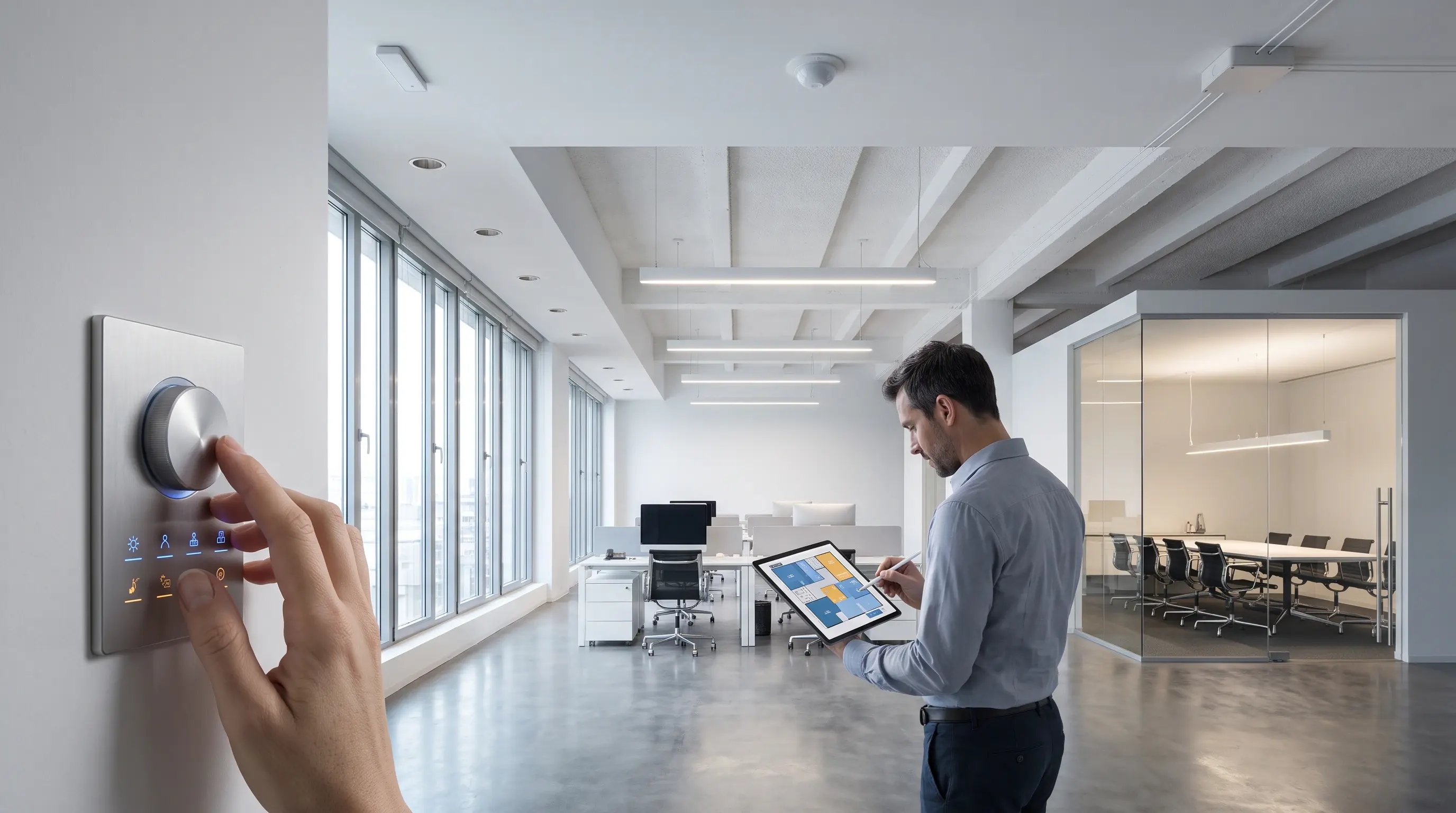
Look for references to switching groups, dimming protocols, occupancy sensors, daylight dimming, scene-setting, or building management system integration. These details affect what drivers and accessories are needed, and whether the proposed product can actually deliver the intended functionality.
For more background, see DALI vs 0–10V vs Smart Lighting and Building Management Systems and Lighting Control Integration.
Watch for Emergency Lighting Requirements
Many lighting specifications include emergency lighting notes either within the main schedule or as a separate package. These notes are critical, because emergency lighting is a life-safety requirement rather than a design preference.
You may see references to maintained or non-maintained fittings, self-test functionality, central test, conversion packs, escape route coverage, or compliance obligations. If the project includes emergency lighting, check exactly what is required and whether the chosen luminaires need emergency variants or separate emergency fittings.
Our supporting resources on this topic include Guide to Emergency Lighting, Emergency Lighting Design, and What Is Emergency Lighting Law in UK Commercial Buildings.
Understand Sector-Specific Priorities
Not every lighting specification is trying to achieve the same thing. As you gain experience, you start to see patterns in what matters most from one sector to another.
- Offices: visual comfort, glare control, energy efficiency, and controls integration.
- Education: clarity, consistency, appropriate lux levels, and durable fittings.
- Gyms and fitness: zoning, robustness, suitable colour temperature, and the right balance between energy and comfort.
- Hospitality: atmosphere, dimming, colour rendering, and layered lighting.
- Data centres: reliability, maintenance visibility, technical coordination, and emergency provision.
If you are working in these sectors, it helps to read technical schedules alongside sector-specific guidance. Related reading includes The Essential Guide to Modern Gym Lighting and Data Centre Lighting in 2026: A Complete Guide.
Questions to Ask When Reviewing a Lighting Specification
If you are unsure whether you have understood a specification properly, these are good questions to ask before a project moves too far forward:
- What is the main task or user need in each space?
- Are the lux levels and uniformity targets clearly defined?
- Is glare control required, and is there data to support it?
- Are CRI and colour temperature appropriate for the application?
- Does the fitting suit the ceiling type and installation constraints?
- What controls protocol is required?
- Are emergency lighting requirements included?
- Is the specification based on performance, brand preference, or both?
- Has the design been checked against compliance guidance and real product data?
These questions help turn a passive reading of the document into an active review process. That is exactly the mindset good specifiers develop over time.
Why This Matters Commercially
Reading a lighting specification properly is not just a technical skill. It is a commercial one. The better you understand the performance requirements at the start of a project, the less likely you are to run into redesigns, substitutions, compliance issues, or disappointed clients later on.
For architects, designers, and contractors, that means smoother coordination and fewer surprises on site. For clients, it means a lighting scheme that performs as expected, supports the brief, and stands up over time.
At 299 Lighting, we work with project teams to translate specifications into workable, buildable lighting solutions across commercial sectors. The earlier those conversations happen, the easier it is to balance performance, budget, compliance, and design intent.